yoga-Biometric Mapping for Interoceptive Awareness
n=1 study
early experimentation – in progress
Overview
01
This proof-of-concept experiment explores how continuous biometric data can be mapped to embodied practice not only to analyze physiological responses, but to train internal awareness of those responses over time. Rather than treating metrics such as heart rate, heart-rate variability, and respiration as endpoints for optimization, this work reframes biometric data as a learning tool that helps individuals understand how their own physiology responds to movement, breath, and posture, and then use that understanding to guide perception in future practice.
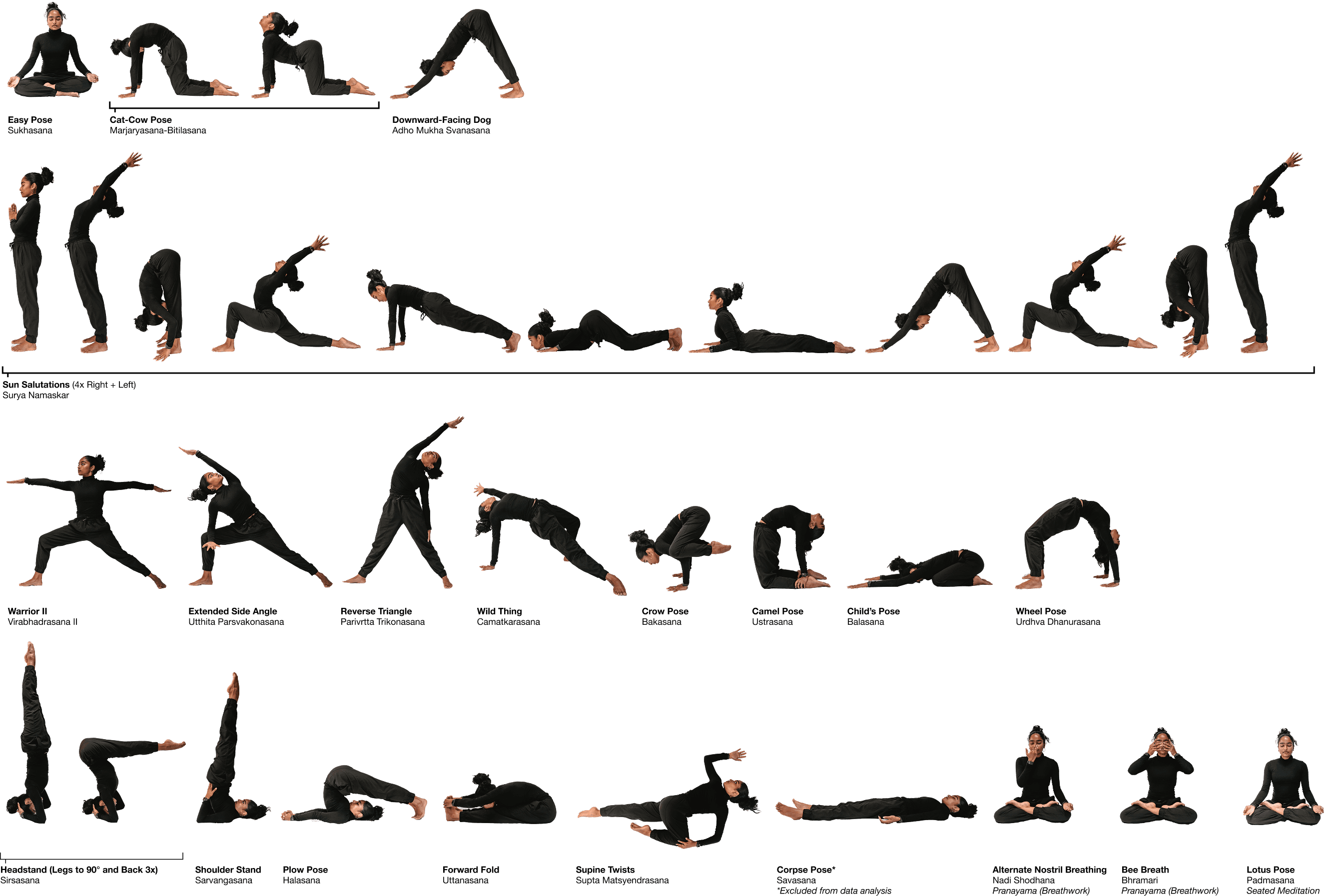
I designed a one-hour Hatha yoga sequence structured to elicit a broad range of autonomic states—dynamic enough to generate measurable variation in cardiovascular and respiratory signals, yet familiar enough to rely on muscle memory and minimize cognitive interference. During the session, I simultaneously collected heart rate, heart-rate variability, heart rhythm, and respiratory rate using multiple wearable devices, then time-aligned these signals to individual postures and transitions within the sequence. This posture-specific mapping revealed distinct physiological signatures associated with effort, recovery, and regulation.
The primary outcome of this analysis is a series of Key Insights and Points of Awareness: specific moments in the sequence where the data highlights meaningful shifts in autonomic state. These points are intended to function prospectively—as prompts for internal observation during subsequent repetitions of the same sequence—creating a feedback loop in which external data informs interoceptive attention. The experiment establishes a method for using biometric data to cultivate felt understanding of the body, rather than replacing it.
Data Sources & Data Types
02
the wearable devices worn for this experiment & the data collected from each
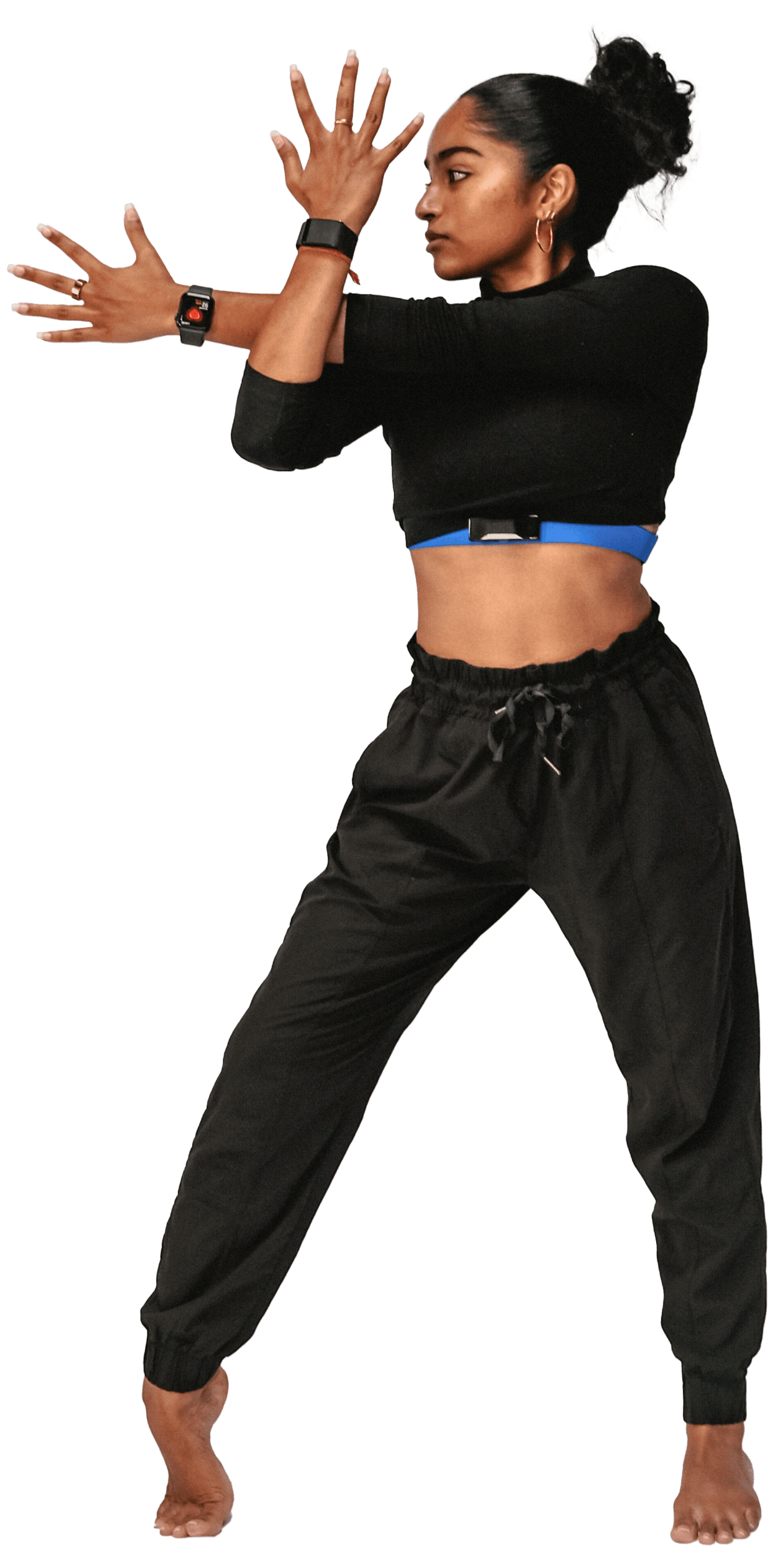
Apple Watch 4
Heart Rate
Oura Ring Gen 3
Respiratory Rate
WHOOP Band
Heart Rate Variability
Fourth Frontier Chest Strap
Continuous ECG
Yoga Sequence
03
The yoga sequence practiced in this experiment
Data Analysis
04
insights & points of awareness (prompts for internal observation during subsequent repetitions of the yoga sequence, informed by the data)
Heart Rate - Respiratory Rate Correlation
Heart Rate (beats/min) / Respiratory Rate (breaths/min)
Average Heart Rate (beats/minute)
Average Respiratory Rate (breaths/minute)
Average Heart Rate Variability (ms)
Heart Rate - Respiratory Rate Correlation (synchronization of Heart Rate and Breath)
Key Insights & Points of Awareness (hover for details)
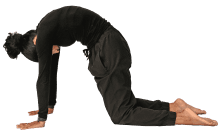
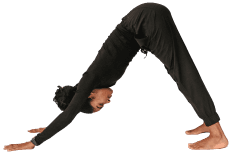

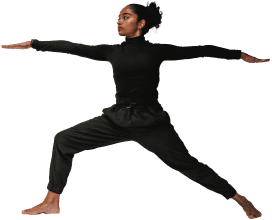
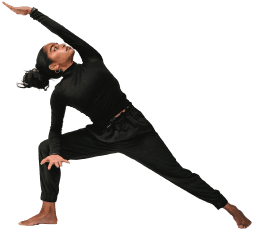
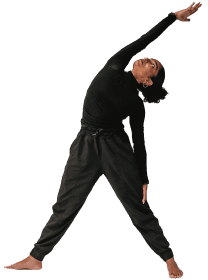
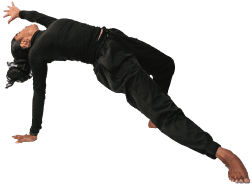
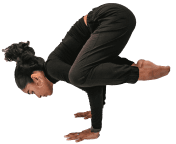
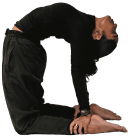

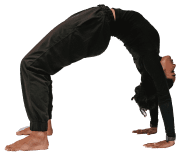

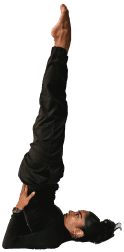


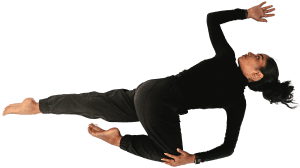



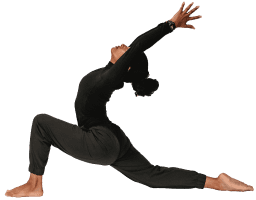
Asana (Posture) / Pranayama (Breathwork)
Easy Pose
Cat-Cow Pose
Downward-Facing Dog
Sun Salutations
Warrior II
Extended Side Angle
Reverse Triangle
Wild Thing
Crow Pose
Camel Pose
Child’s Pose
Wheel Pose
Headstand
Shoulder Stand
Plow Pose
Forward Fold
Supine Twists
Alternate Nostril Breathing
Bee Breath
Lotus Pose
Heart Rate Variability (ms)
100
80
60
40
20
50
60
0.75
1.00
Relationship Between Biometric Data and Yoga Postures
Outcome
04
This experiment demonstrates how posture-resolved biometric mapping can surface insights that are both physiologically meaningful and experientially transformative. While several findings aligned with existing expectations—such as sympathetic activation during dynamic sequences and rapid recovery following backbends—the most compelling result was a consistent and counterintuitive pattern: shoulder stand reliably produced one of the fastest and deepest heart-rate drops of the session, accompanied by marked increases in HRV. Despite literature suggesting that inversions can elevate cardiovascular demand, this posture repeatedly shifted my autonomic state toward regulation.
Crucially, this effect was not limited to a single session. I have returned to this data point over months of continued practice and observed the same response consistently: shoulder stand lowers my heart rate more quickly than any other posture or breathwork intervention I use during exertion. What began as an external data insight has since reshaped my internal experience of the posture—directing attention to the felt slowing of the heartbeat, the easing of breath, the release of pressure in the chest, and the body’s own capacity to regulate. This illustrates the central value of the method: data does not replace perception, but teaches the practitioner what to notice.
The broader research potential of this work lies in formalizing this approach into a repeatable, longitudinal protocol. By standardizing sequence structure, transitions, and breathing conditions; capturing additional contextual variables such as perceived exertion; and repeating measurements across sessions and participants, this method could test hypotheses such as whether average heart rate across a fixed sequence decreases with consistent practice, and whether certain postures function as reliable, individual-specific regulators of autonomic state. Positioned this way, biometric data becomes a bridge between objective measurement and embodied learning—supporting rigorous inquiry into how practice reshapes physiological regulation while deepening interoceptive awareness over time.