heart
The Heart is a tangible interface that translates real-time heart rate data into a physically felt heartbeat, synchronized with the holder's heart. Designed as a research instrument, it examines how experiencing one’s own physiological rhythm through a believable, biomimetic form influences interoceptive awareness.
Conventional body-sensing systems present cardiac data as abstract metrics, requiring cognitive interpretation rather than direct perception. By rendering heartbeat as time-aligned physical rhythm and pressure, the Heart investigates how tactile feedback can support perceptual understanding of internal states and reorient attention toward the body.
flagship research – in progress
in collaboration with trent jones (hardware engineer)
v1 Functional prototype
Research Approach
01
Research Question
Does holding a biomimetic heart that physically beats in sync with a person’s heartbeat impact their ability to perceive their own heartbeat?
Role of the artifact
This research relies on felt experience of the heart beating as opposed to numerical or symbolic representation of heart rate. The experience is produced by translating real-time heart rate data into the biomimetic motion of a lifelike physical heart artifact. The form, motion, and synchronization are integral to allowing embodied, time-aligned feedback to be studied through direct experience rather than cognitive interpretation.
Experiment Design
The study is structured around within-participant comparison. Participants first complete baseline measures of heartbeat perception and interoceptive awareness. They then interact with the biomimetic heart under controlled conditions designed to isolate the effects of synchronized, felt heartbeat feedback.
To distinguish the effects of synchrony and believability from novelty or touch alone, the method includes comparison conditions, such as interaction with a non-synchronized or non-responsive version of the artifact. Condition order is counterbalanced to reduce learning and expectation effects.
Evaluation Method
Heartbeat awareness is assessed using a set of quantitative and qualitative measures:
Heartbeat perception tasks, evaluating the ability to perceive heartbeat without numerical or visual reference
MAIA (Multidimensional Assessment of Interoceptive Awareness), administered pre- and post-interaction
Phenomenological interviews, capturing subjective clarity of heartbeat and attentional shifts
I am exploring custom task-based measures of heartbeat awareness as well, designed specifically for tactile interaction with hearbeat.
System Architecture
02
The system is a physical interface that renders a person’s heartbeat as synchronized, tactile feedback.
System components:
Physiological input
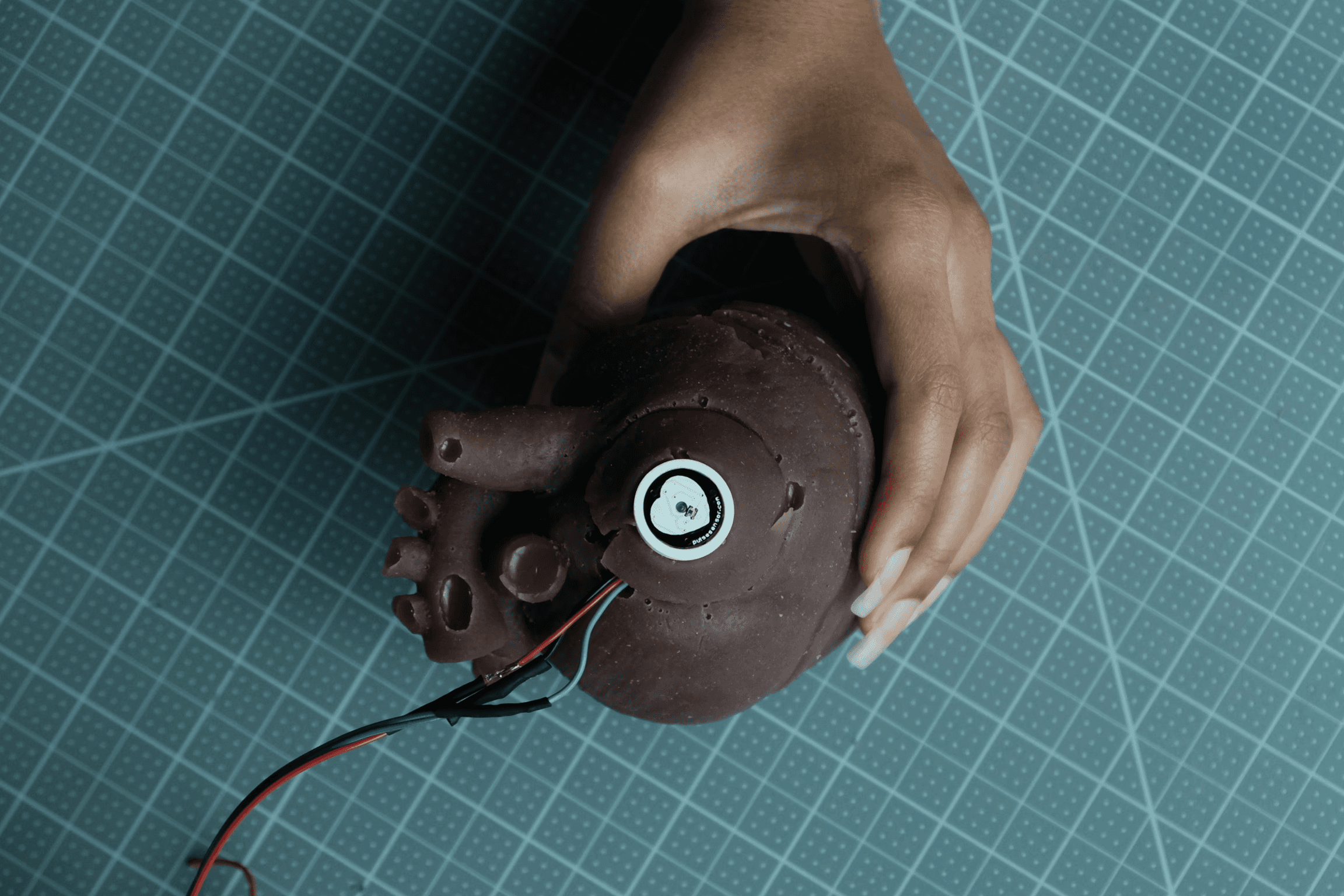
An embedded PPG sensor collects continuous heart rate data from the hand holding the heart.
Signal mapping
Heart rate data is processed in real time and mapped directly to actuation.
Actuation
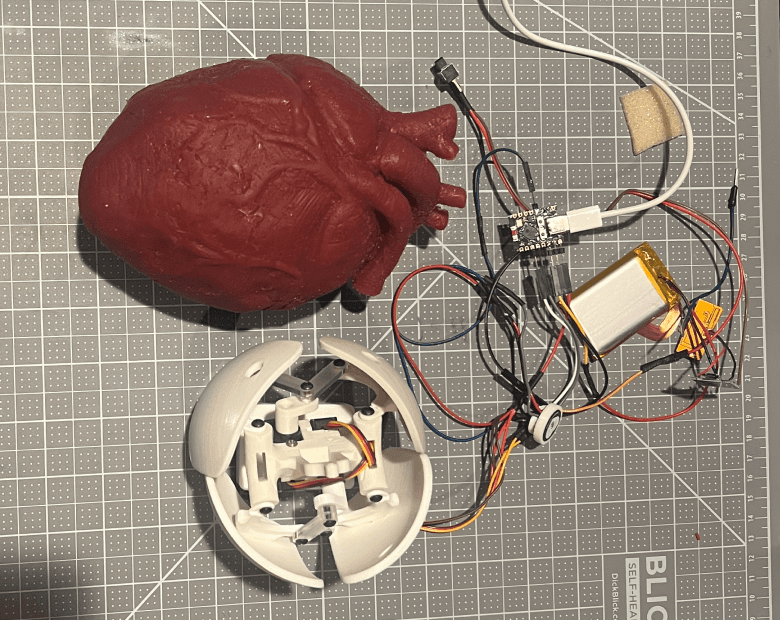
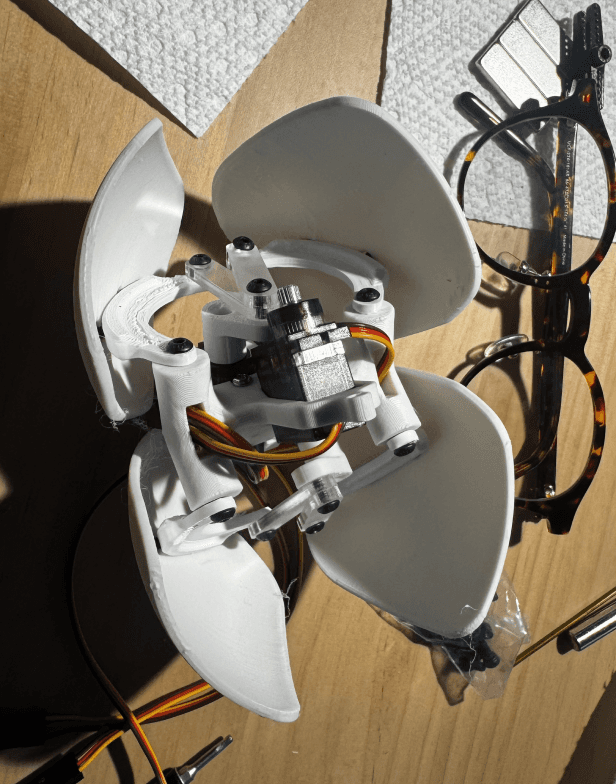
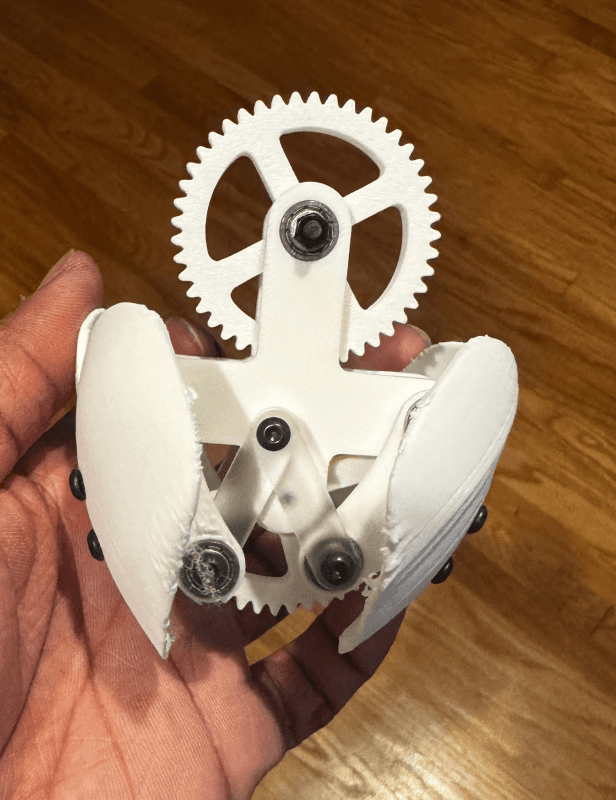
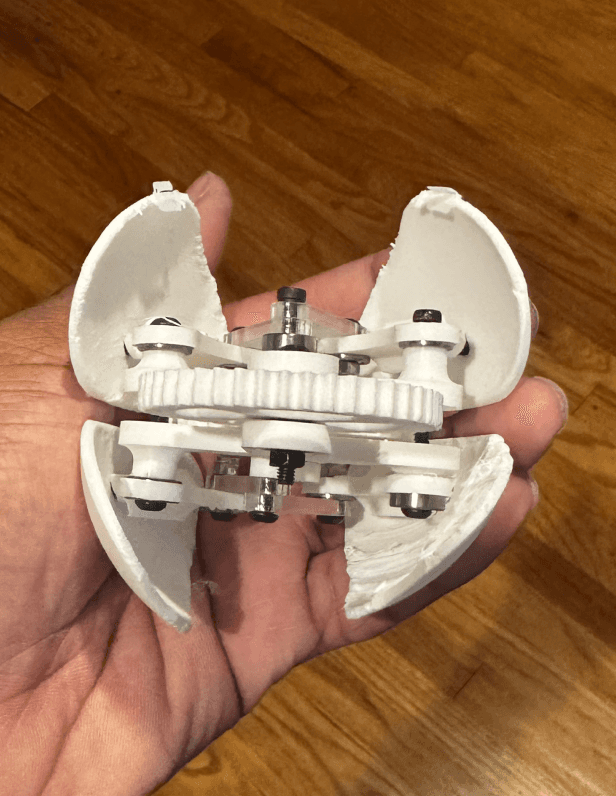
Internal mechanisms convert the data into a physical beat, experienced as subtle pressure and rhythmic motion, perceivable through touch.
Interface form
Feedback is delivered through a life-size, soft silicone heart designed specifically to be held. The lifelike form and material support intuitive perception of heartbeat and reduce cognitive translation.
Interaction loop
Body → Heart Rate Data → Physical Motion of Artifact → Bodily Perception
Design Considerations
03
For this research, form is not an aesthetic layer added after function. It is the medium through which the physiological signal becomes perceptible, and therefore a core component of the research itself. The form is designed to support perception of heartbeat by the body (via touch), beyond the mind (via numerical or symbolic representation). Form determines whether the signal is legible, believable, and able to hold attention over time.
Design Criteria:
Embodied familiarity
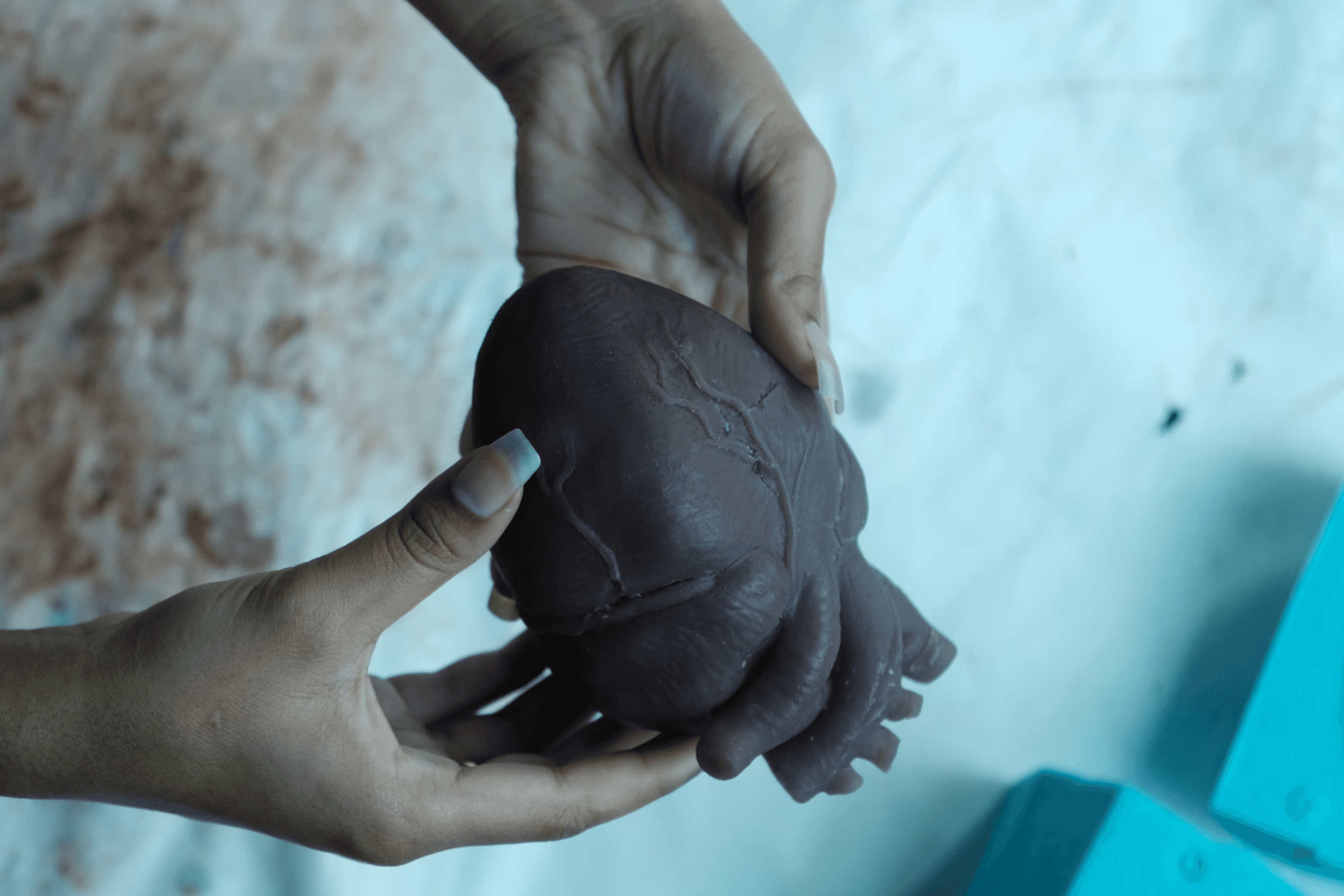
The form must feel like one’s own heart. Anatomical realism and hand-scaled proportions support immediate bodily recognition, reducing cognitive distance and allowing the object to be experienced as an extension of the body rather than an external device.
Physical invitation
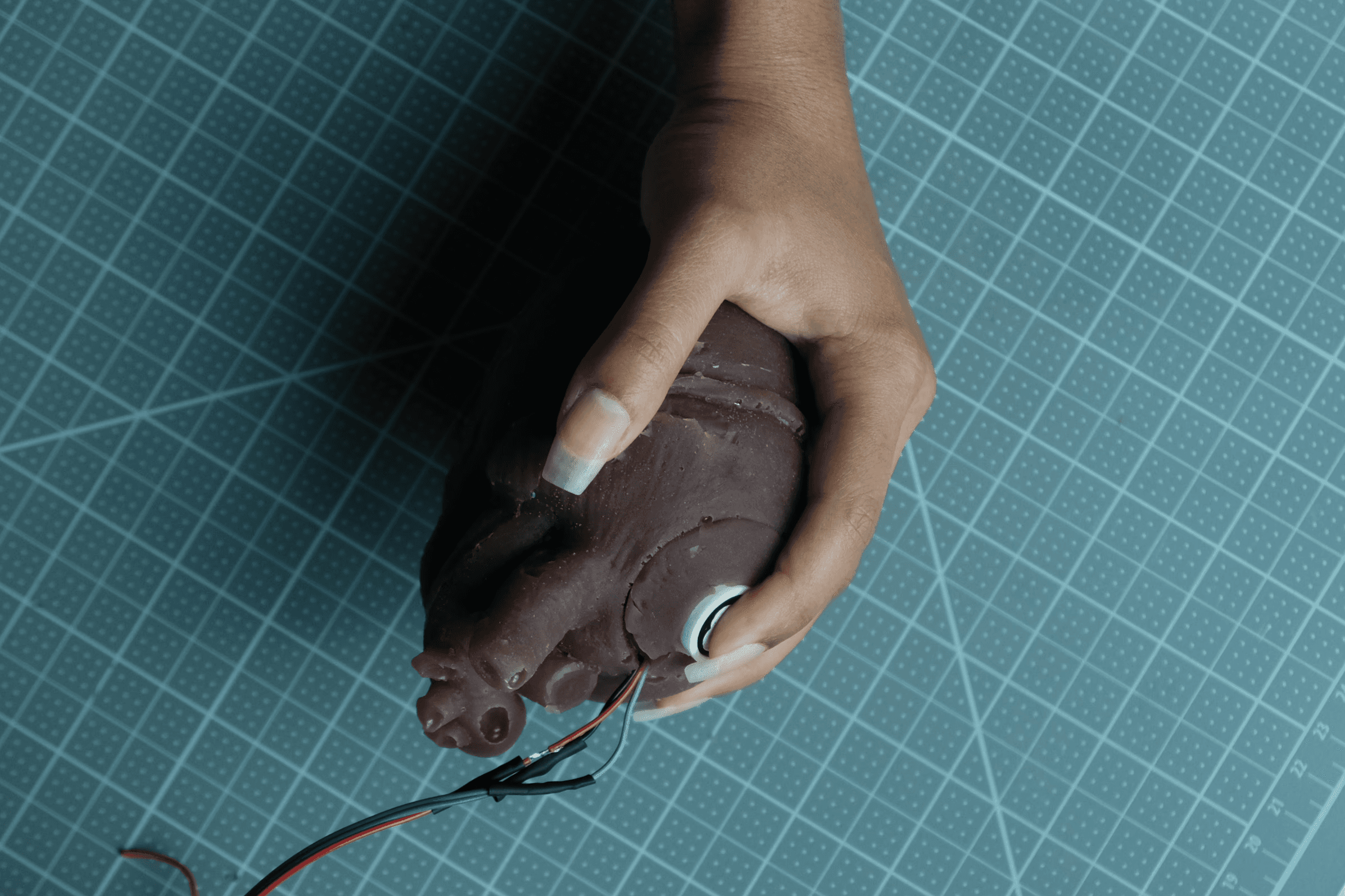
The form must invite being held. Curvature, mass distribution, surface texture, and temperature are tuned to support sustained holding, intuitive interaction, reliable sensor contact, and attentional presence.
Synchronized, lifelike motion
The heart must beat in real time with the user’s own heartbeat. Actuation is designed to be subtle and rhythmic, preserving the qualitative feel of a living heart rather than a mechanical output. Temporal synchronization is essential for perceptual coherence between internal sensation and external feedback.
Illusion of life
The operation of the system must remain invisible. Electronics, wiring, and mechanical components are fully enclosed, and audible or visual cues of machinery are minimized. Preserving this illusion prevents attention from shifting from felt rhythm to the underlying technology.
Perceptual clarity through touch
All form and material decisions ultimately serve the clarity of the felt heartbeat. Surface compliance, wall thickness, and internal structure are adjusted to ensure rhythmic motion is clearly perceivable without visual confirmation.
Iterative form development
The form continues to evolve through cycles of making, testing, and refinement. Thus far, I have focused on:
Ergonomic cues that intuitively invite correct hand placement for reliable contact with sensor
Degree of realism vs. abstraction for intended emotional experience
Silicone thickness for intended scale and reliability to house mechanics
Internal cavity geometry and actuation placement for scale-minimizing fabrication and anatomical accuracy
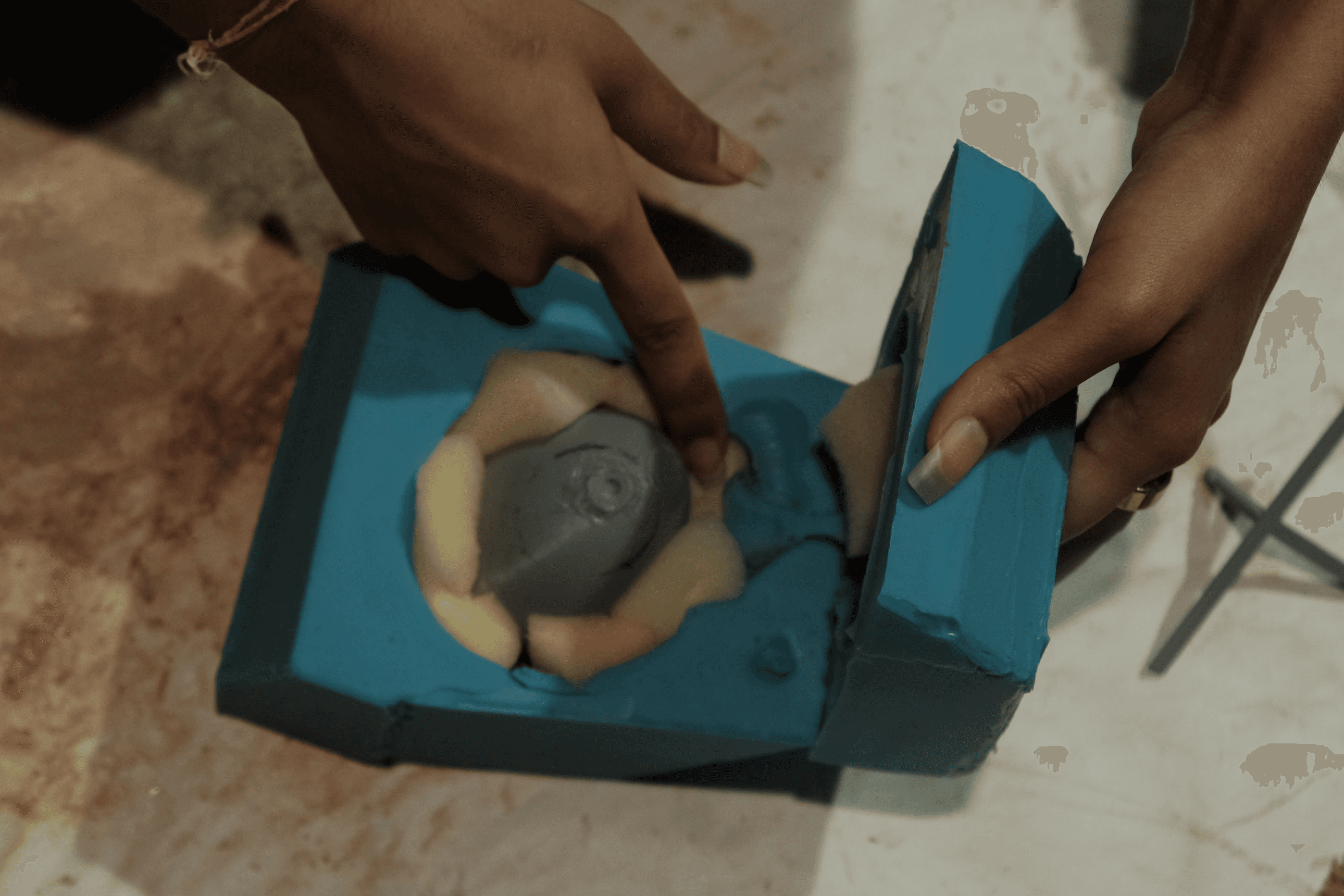
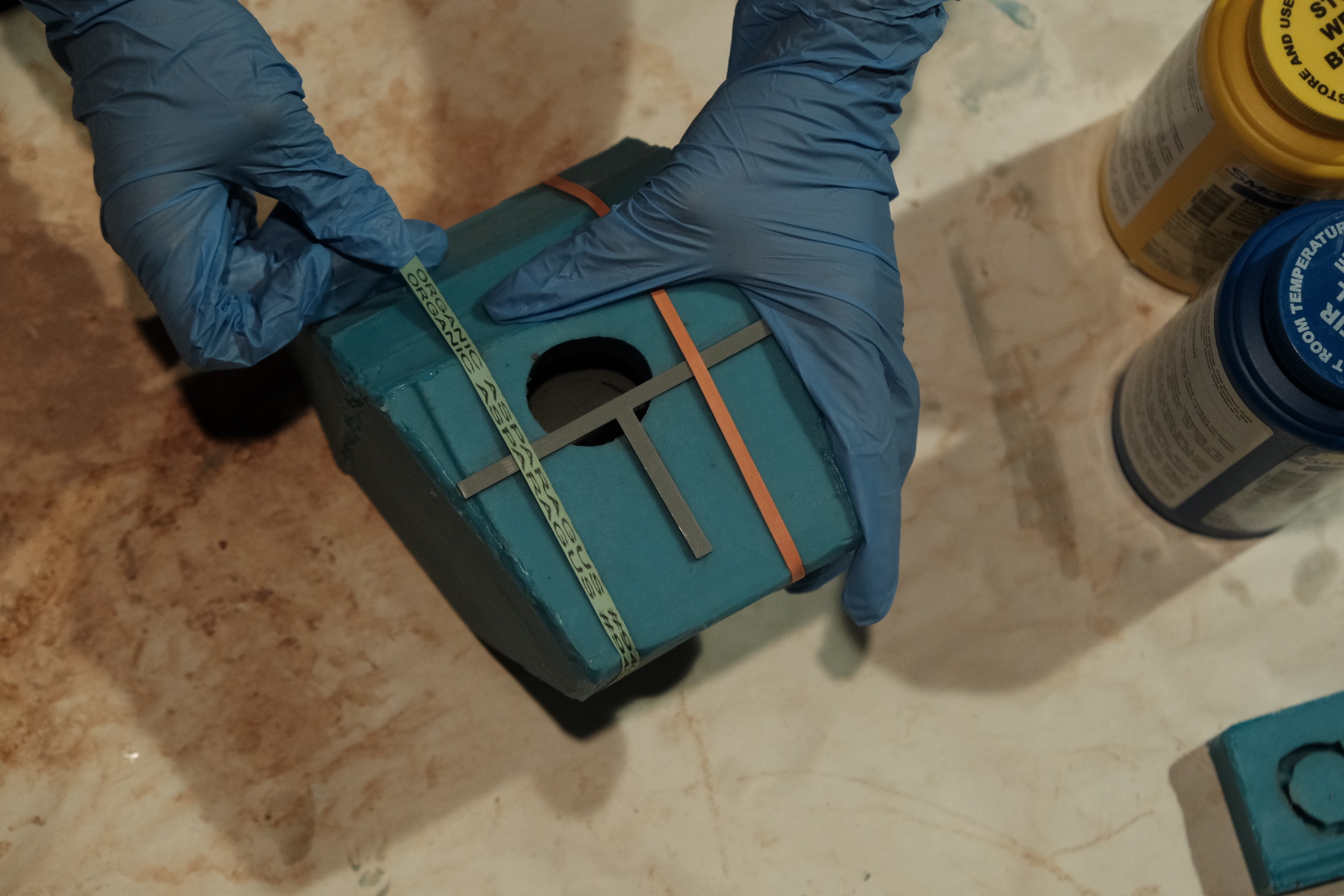
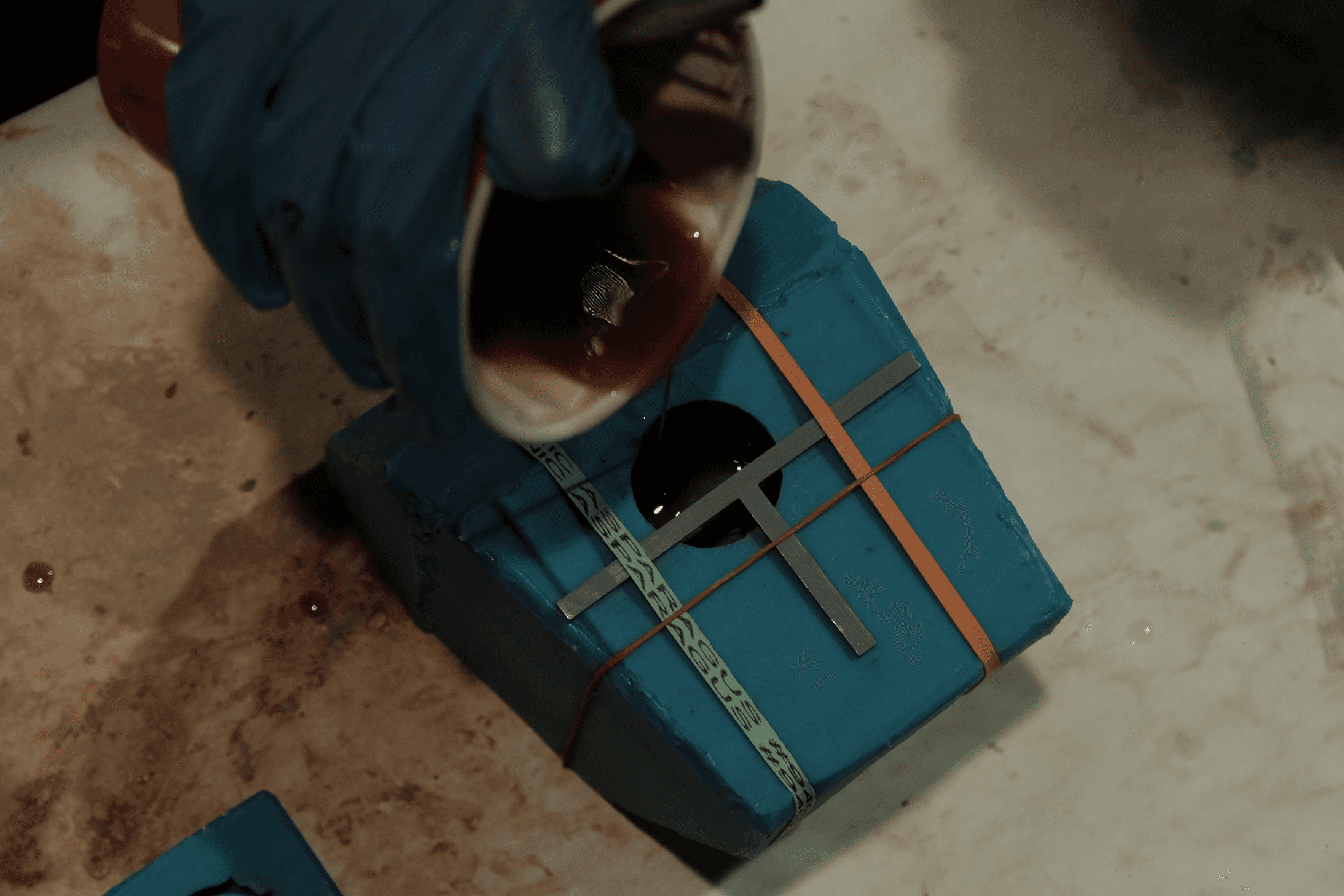
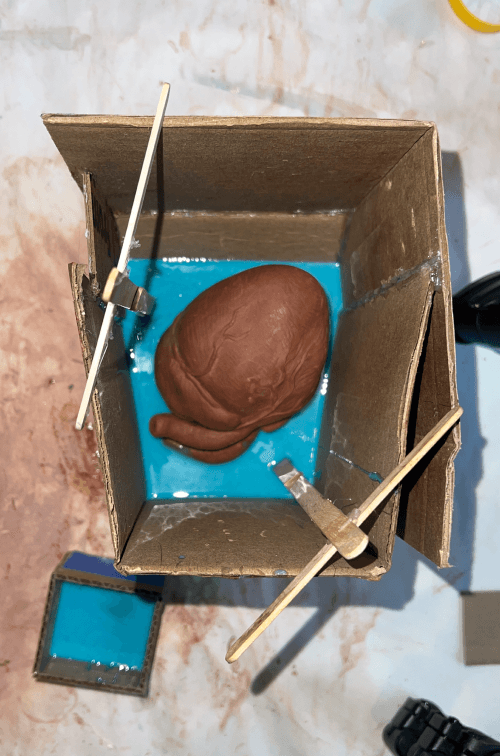
Fabrication systems for pouring mold, casting silicone, and embedding electronics for optimizing production without compromising realism
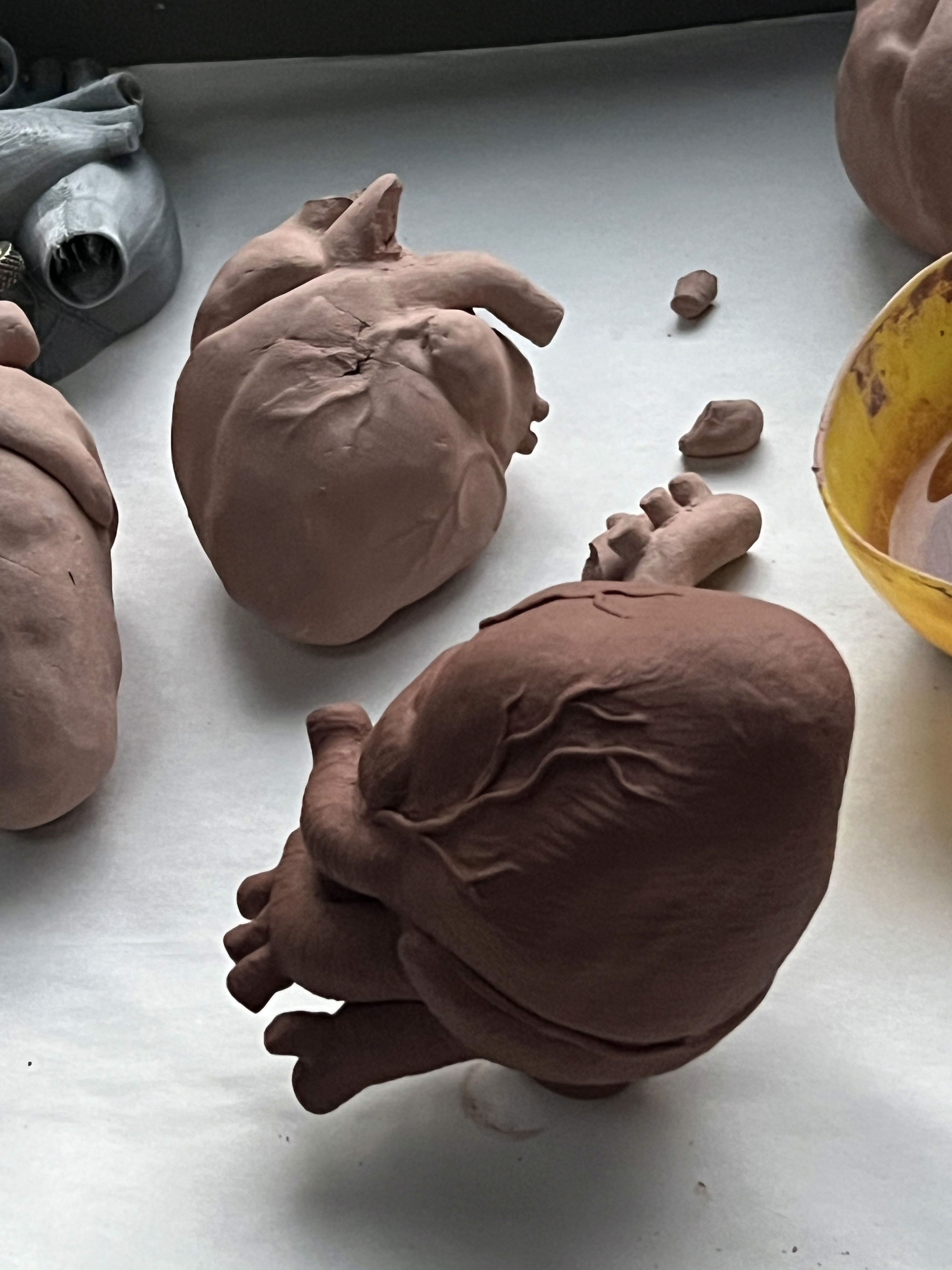
Prototyping: Form
04
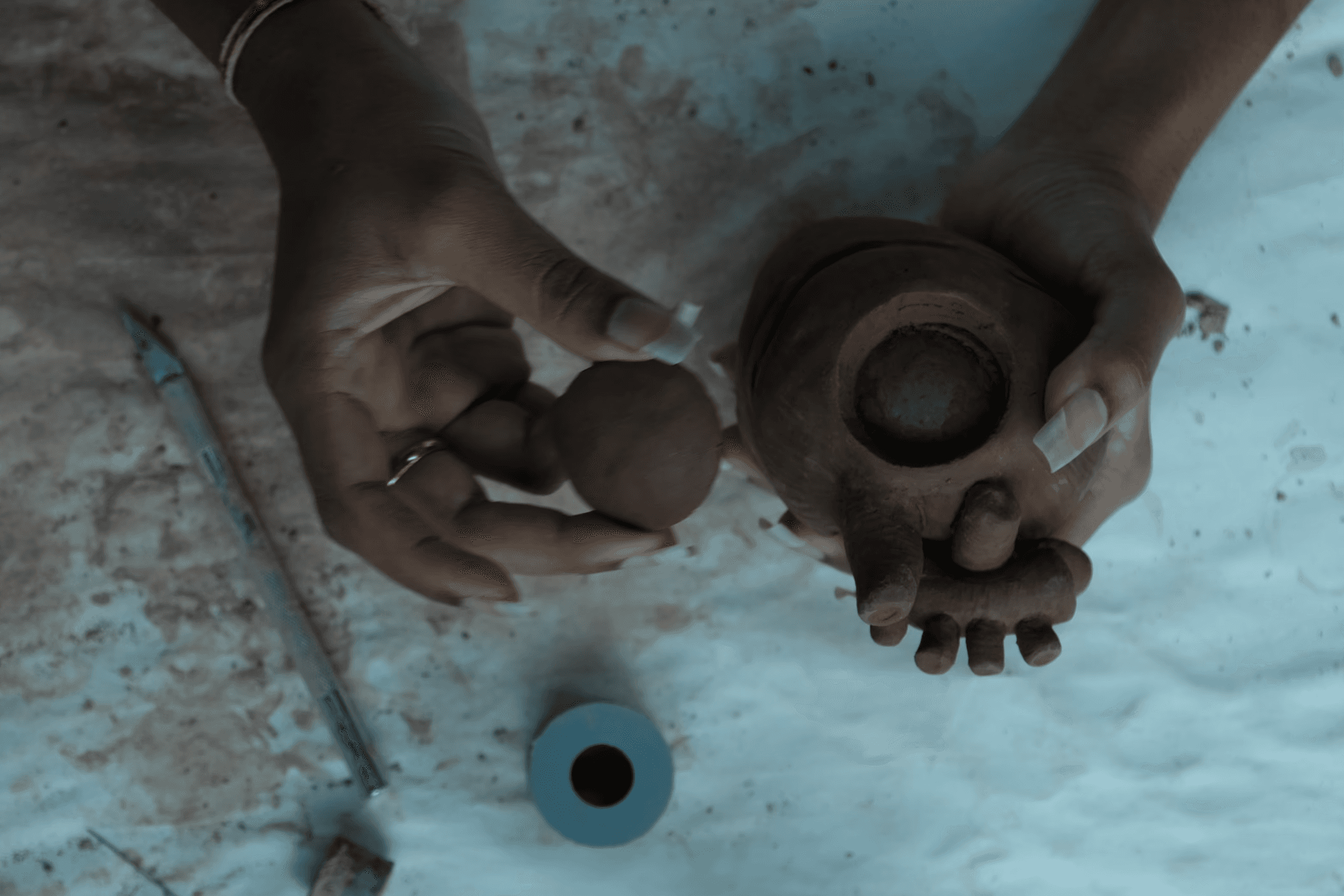
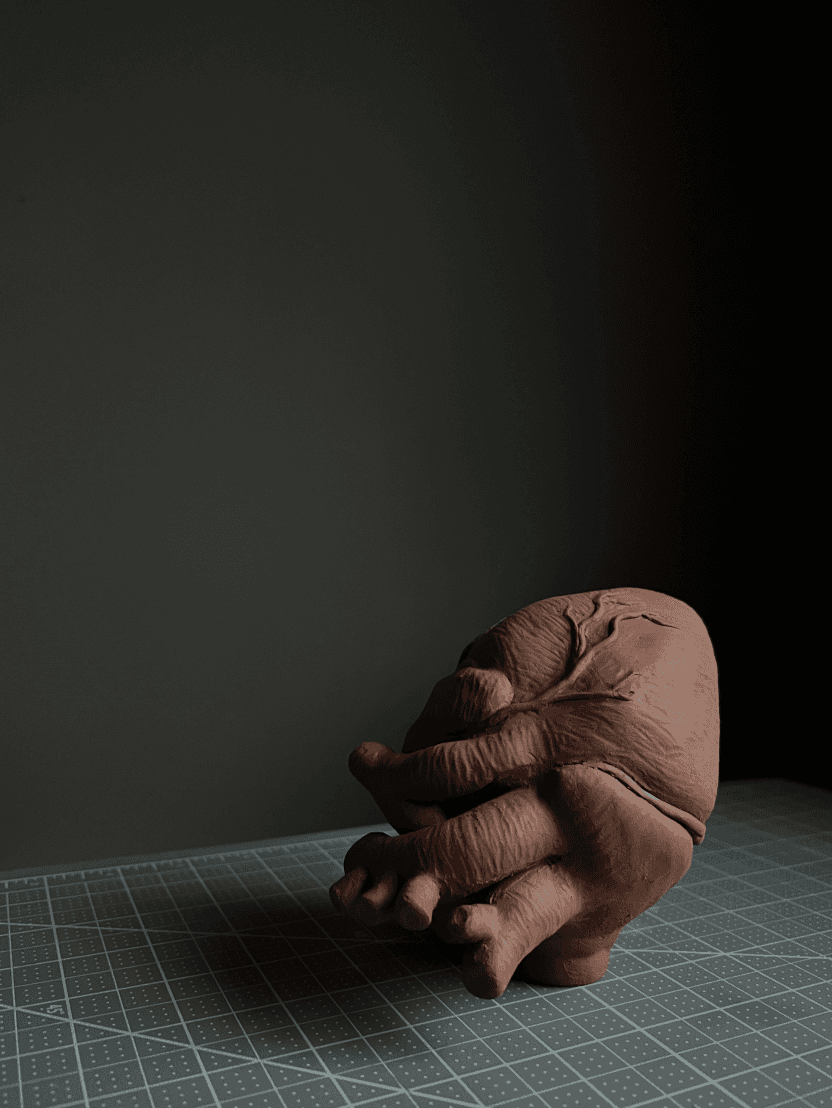
testing hand orientations on clay heart prototype to determine optimal sensor placement
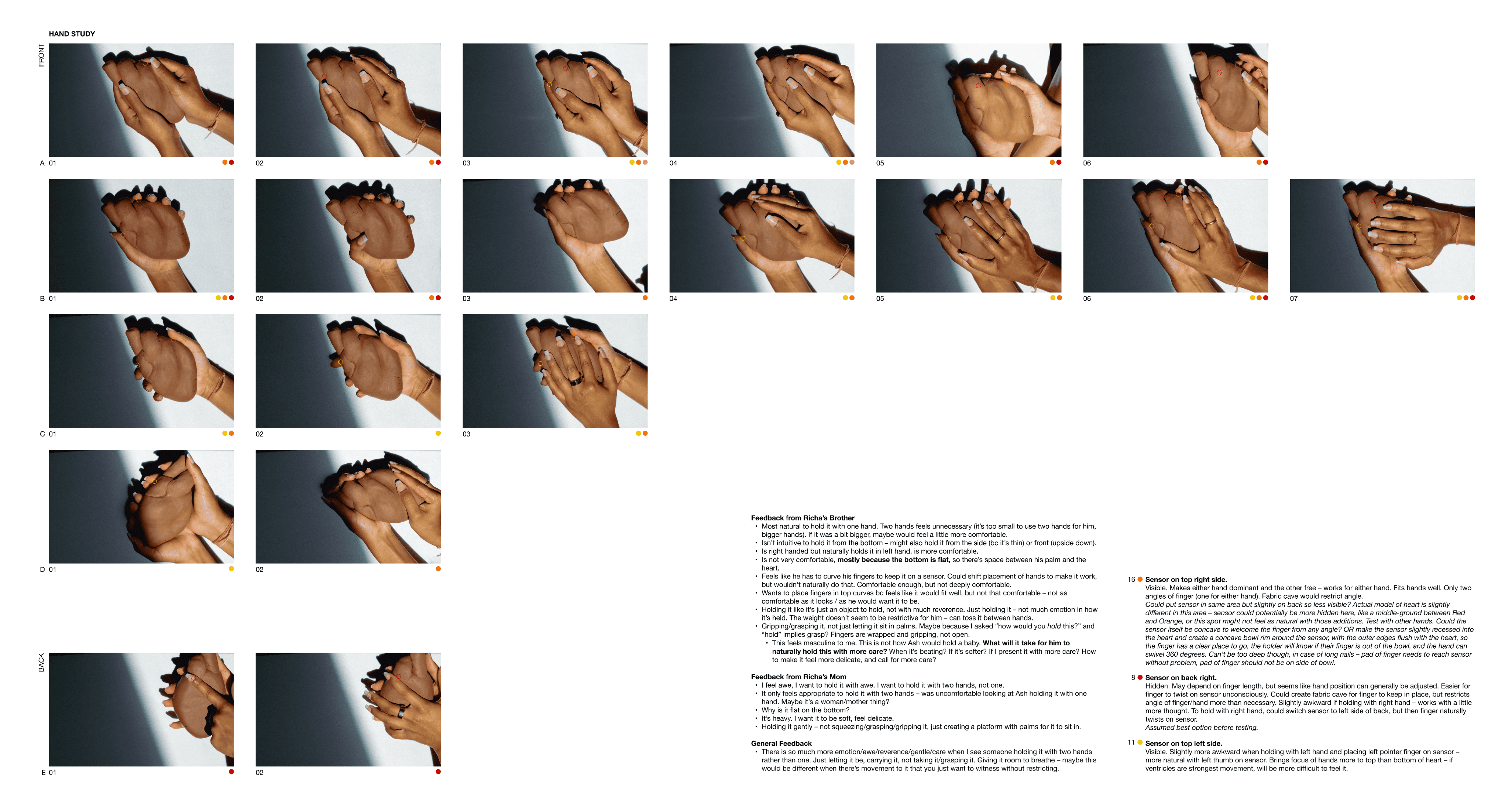
testing Ergonomic cues that intuitively/unconsciously invite intended hand placement for reliable contact with sensor

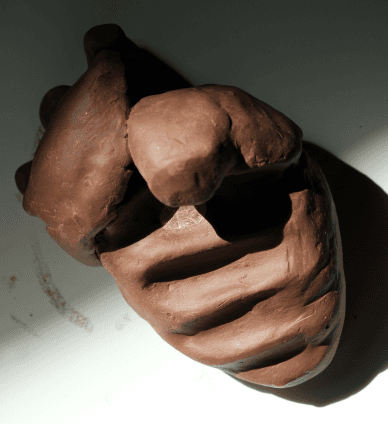

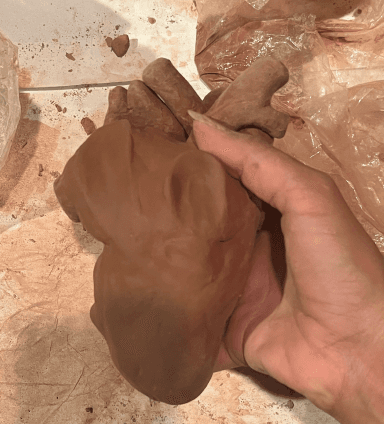
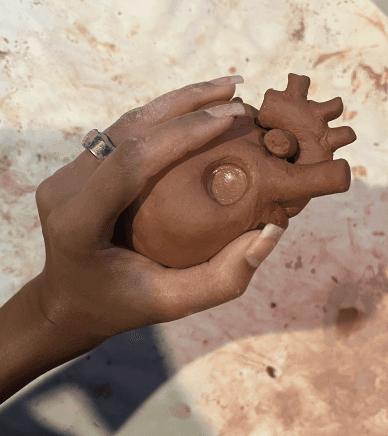

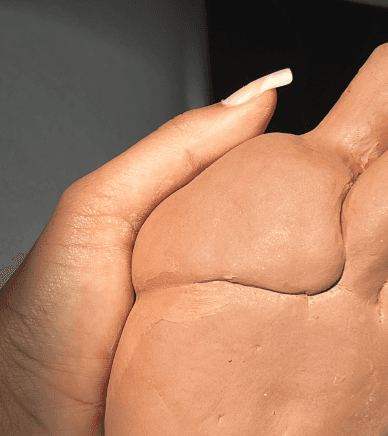
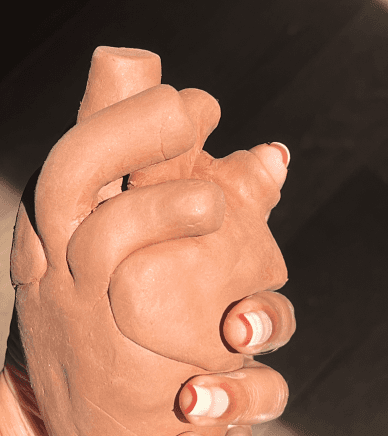

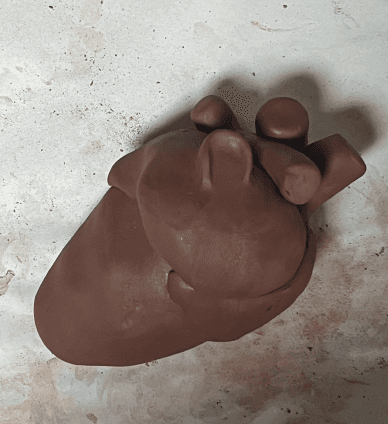
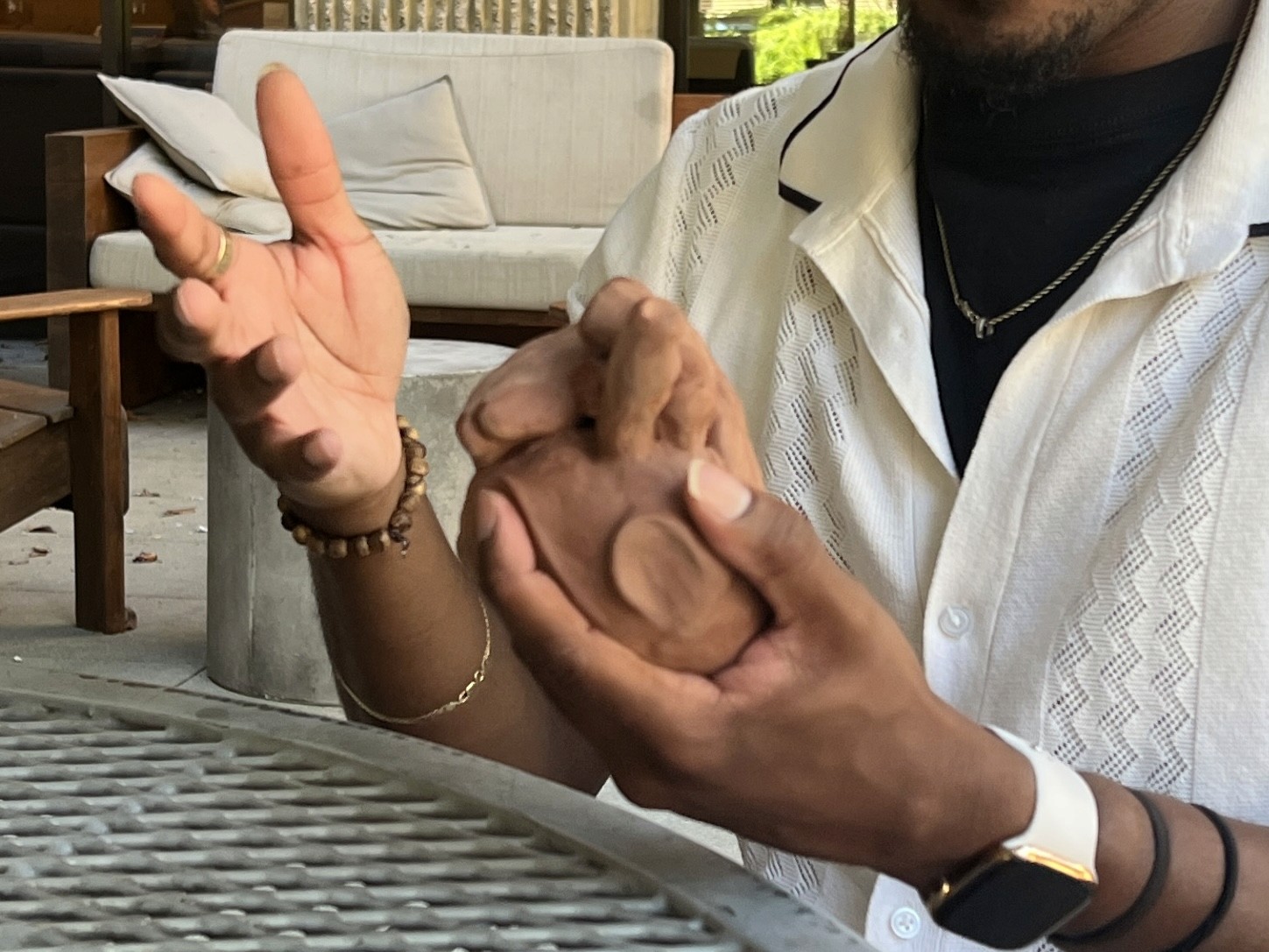
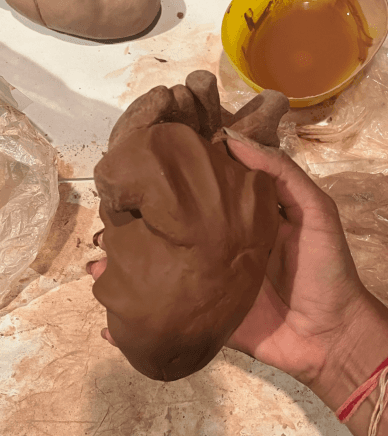
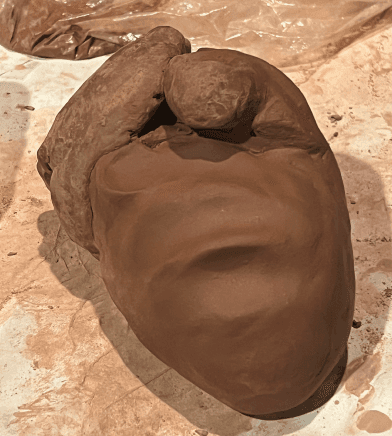
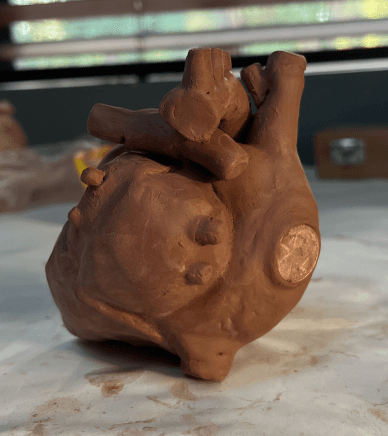
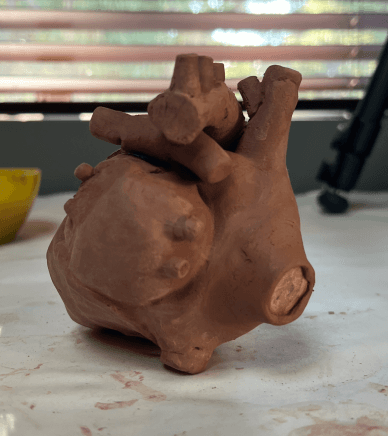

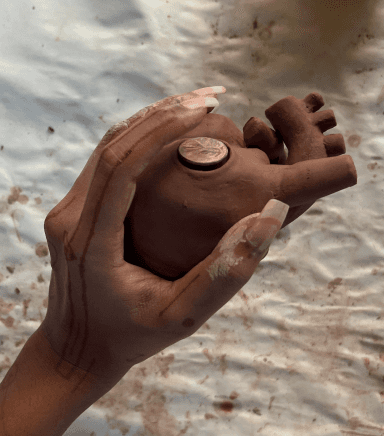
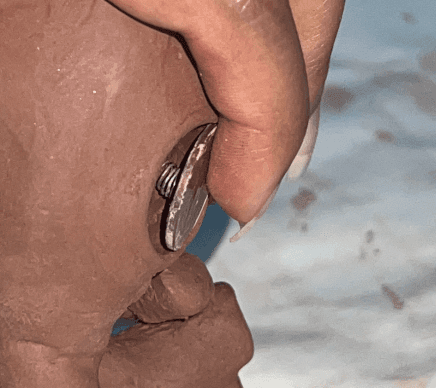
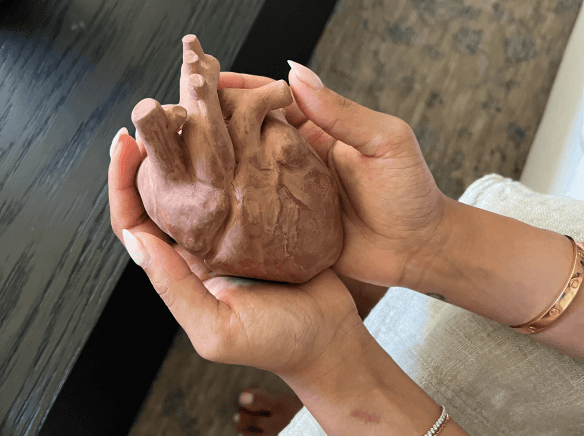

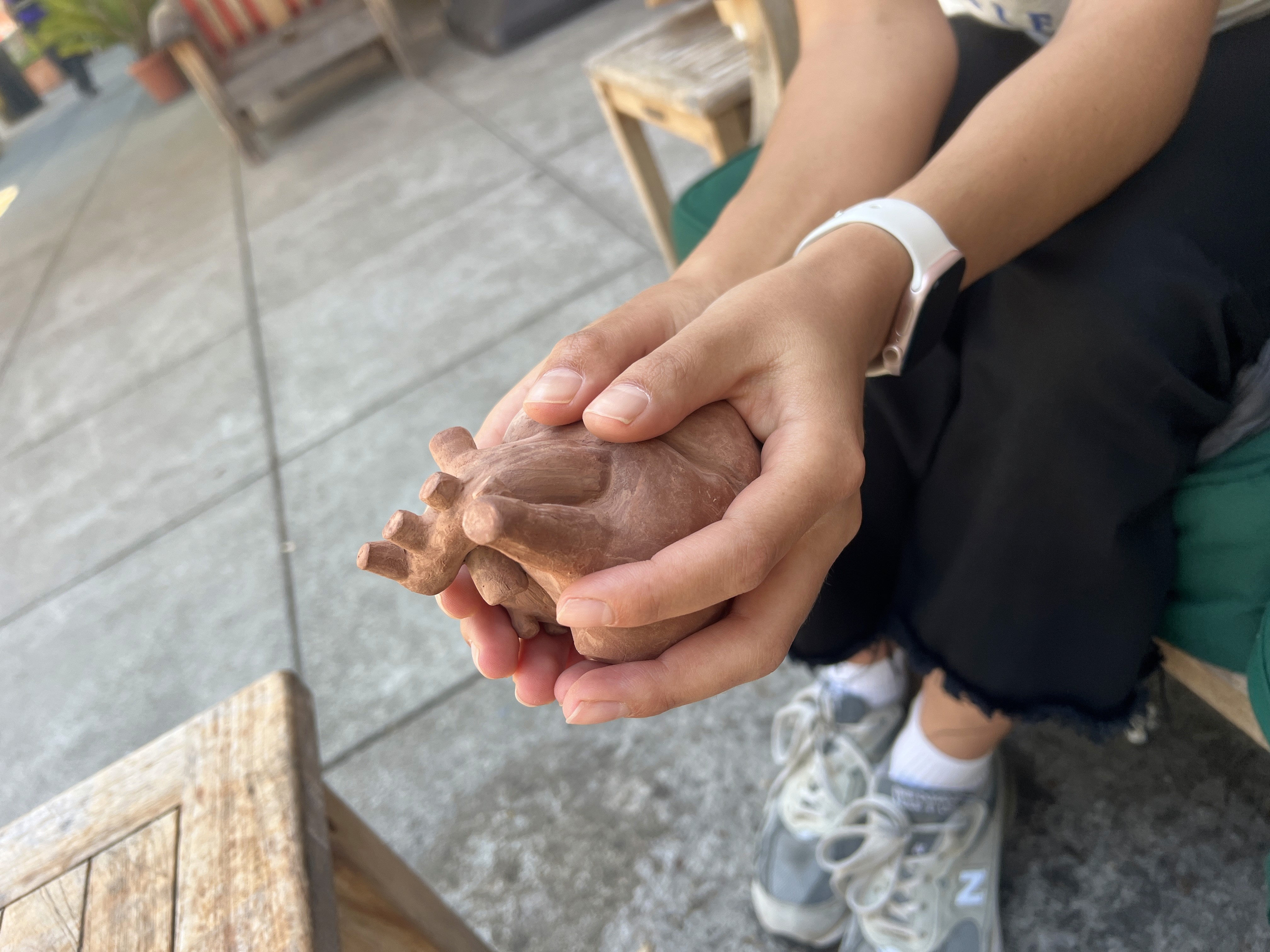


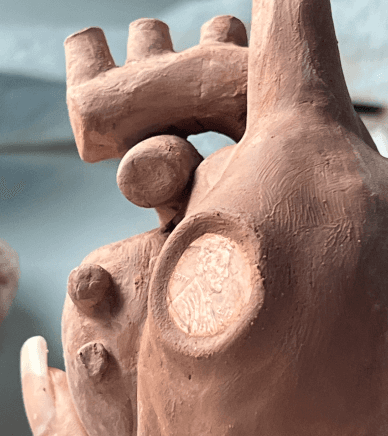
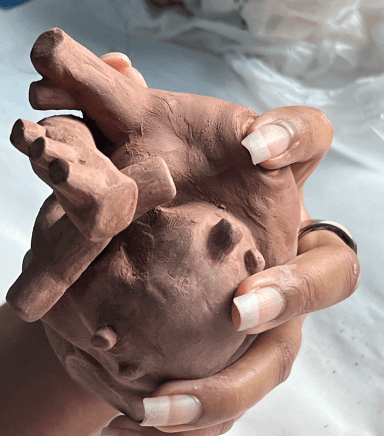
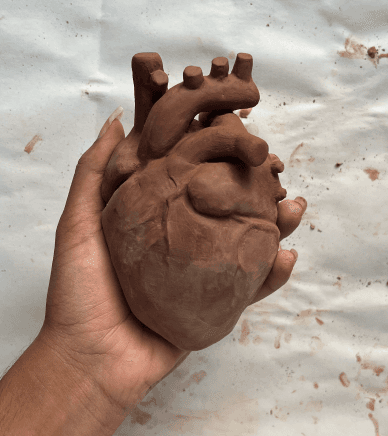


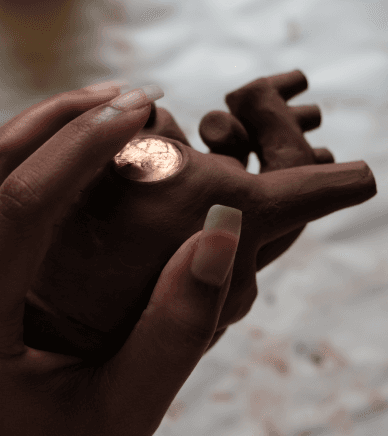
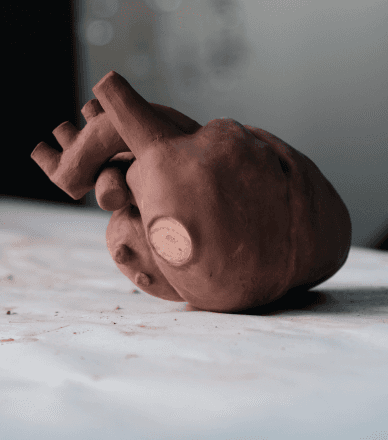


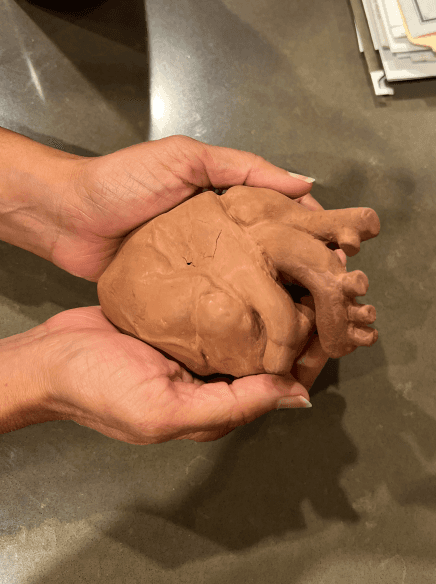

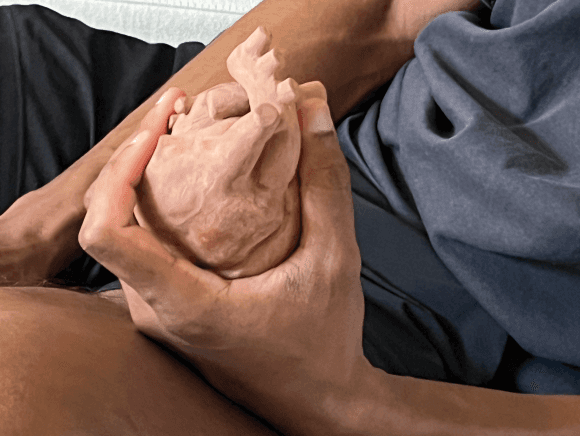

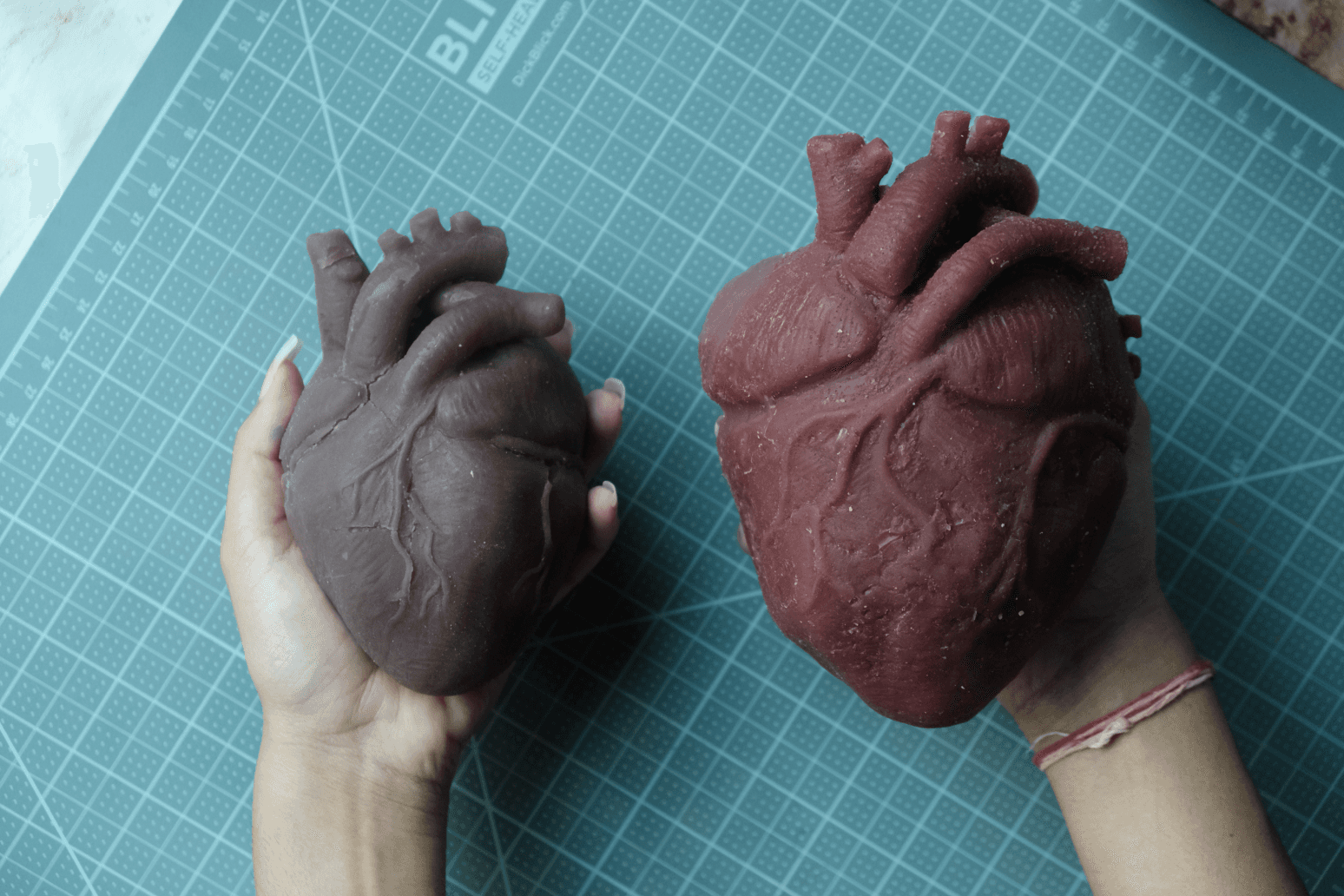
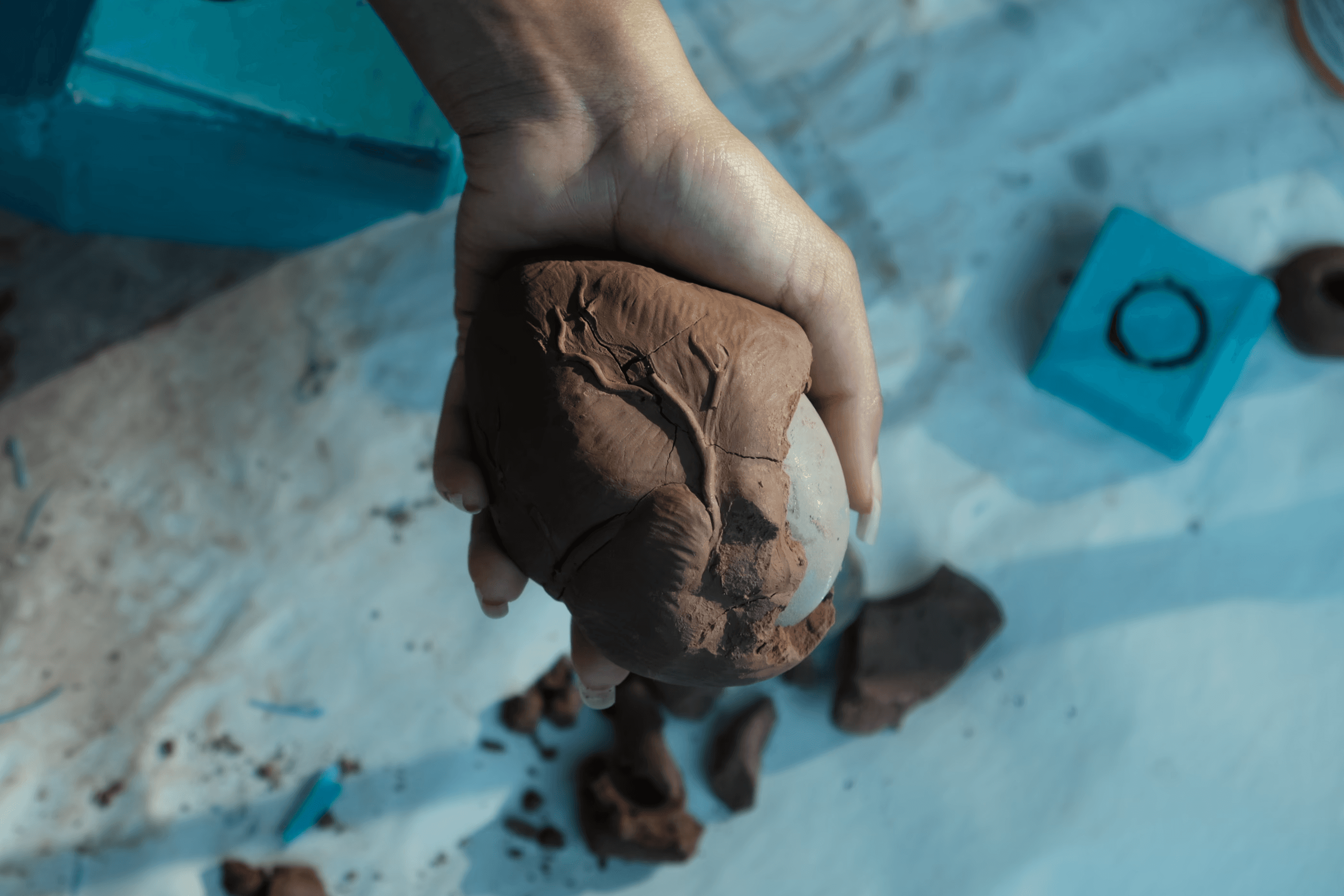
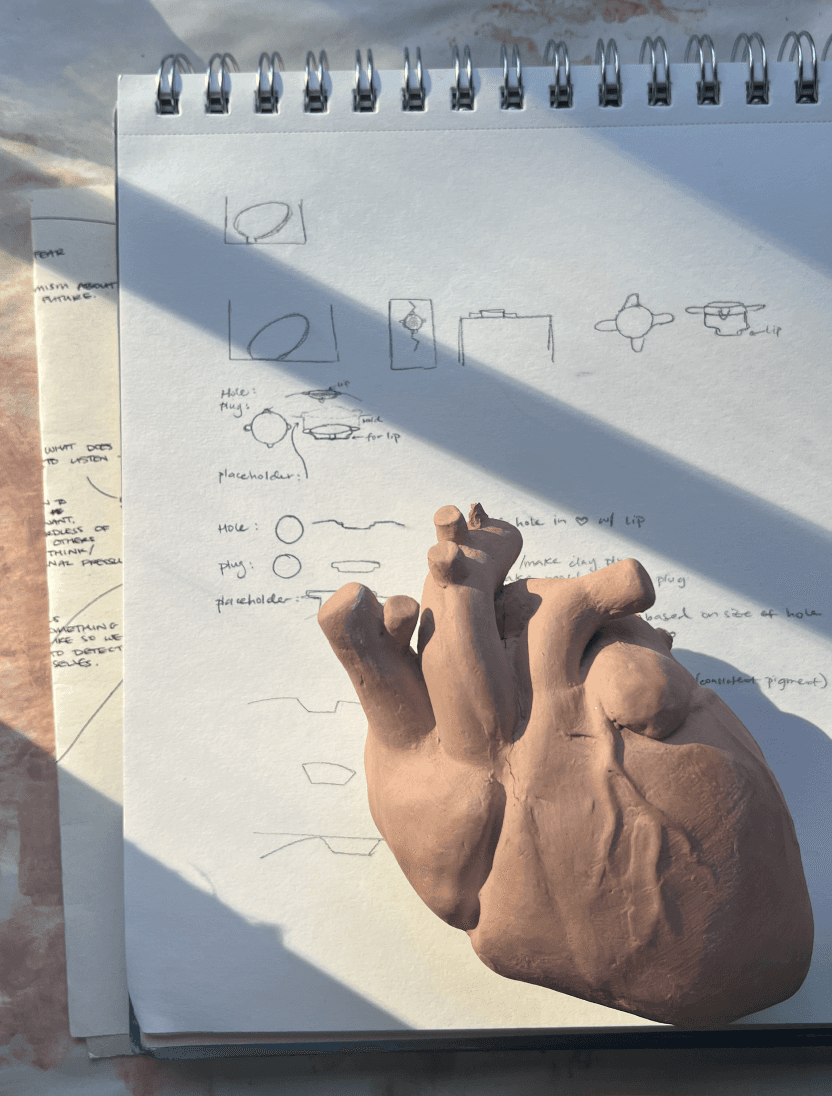
sculpting, molding, iteratively casting large-scale silicone heart to encase v0 electronics
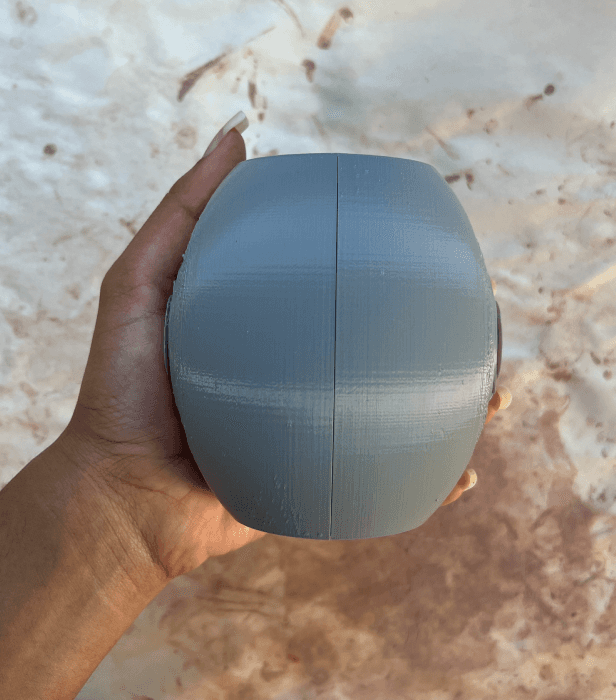
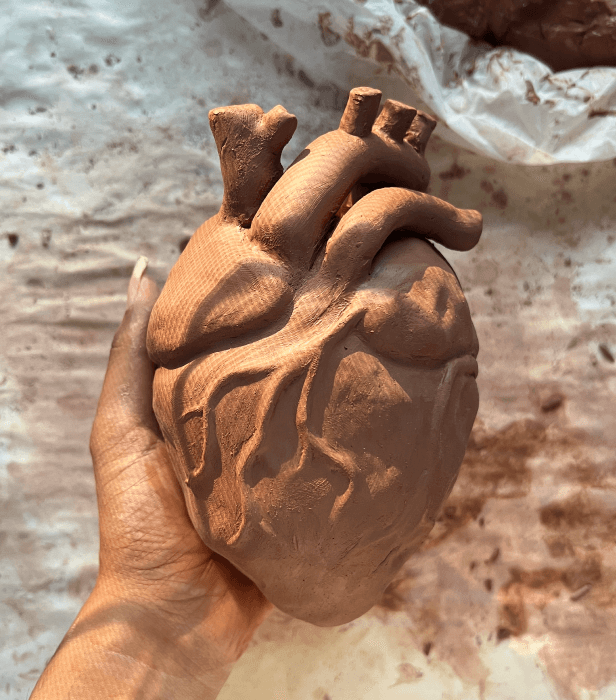
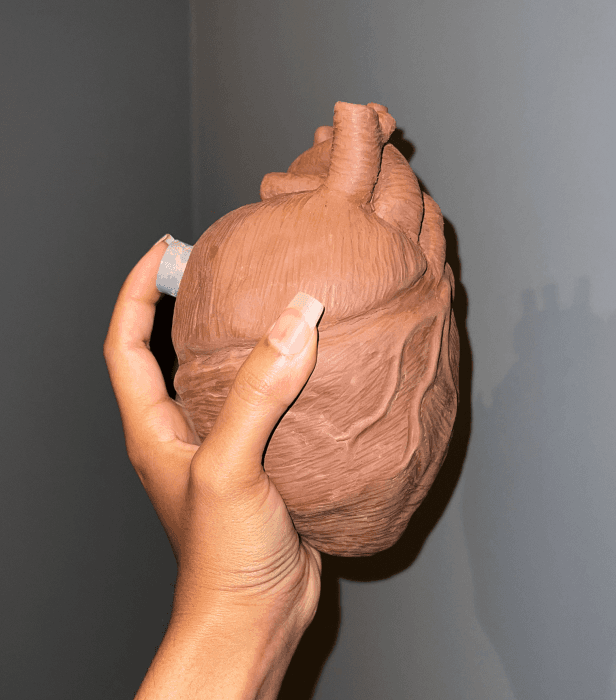
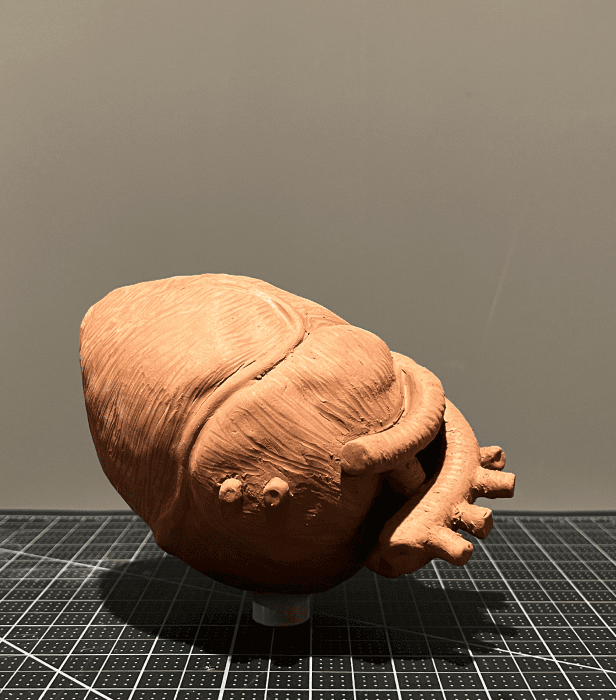
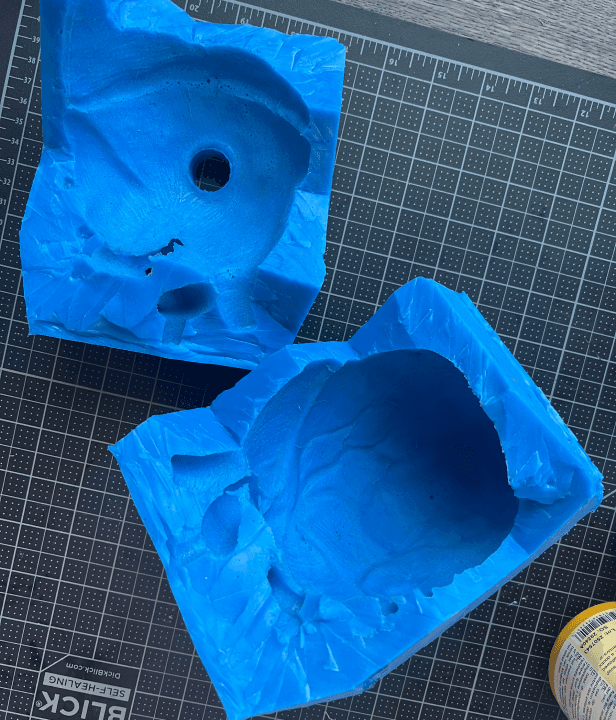
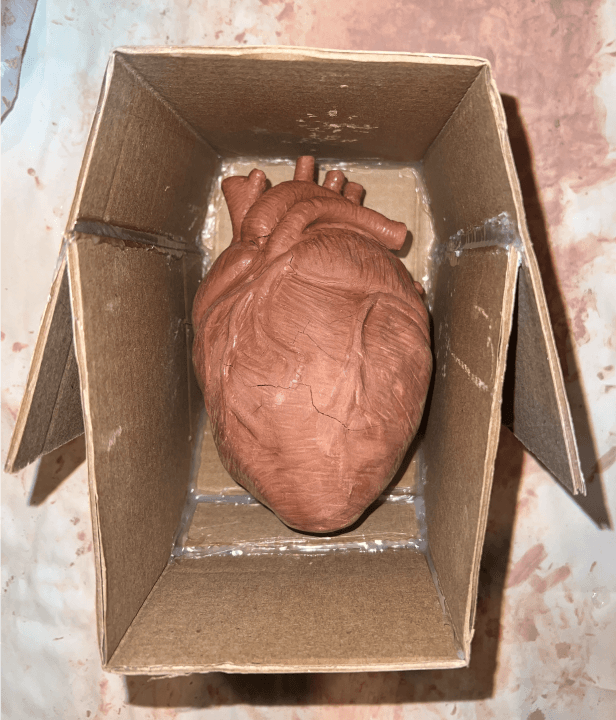
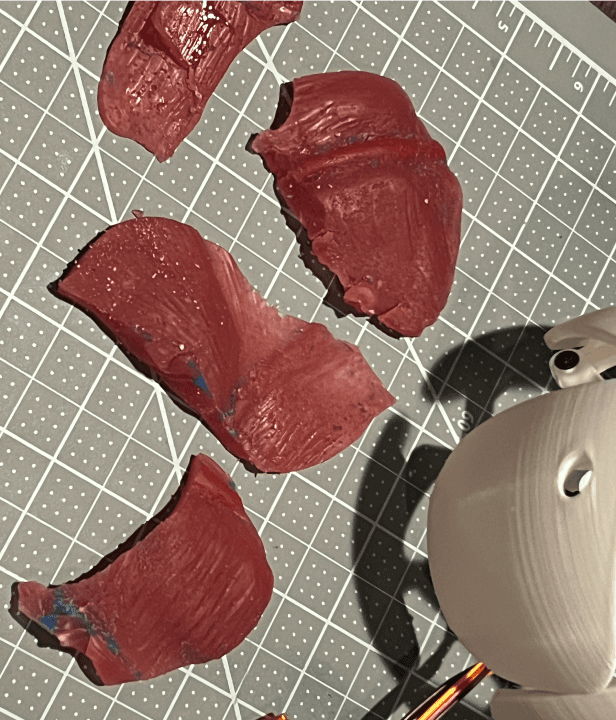
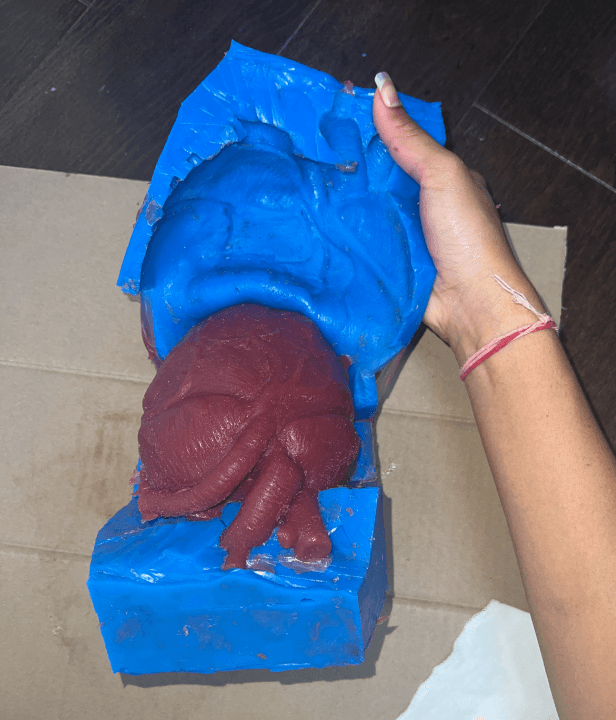
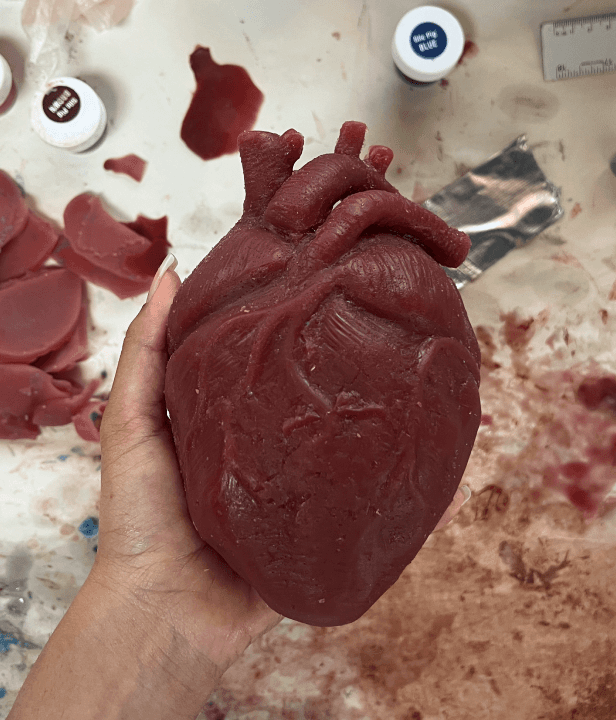
sculpting, molding, casting to-scale silicone heart to encase v1 electronics





Prototyping: Function
05
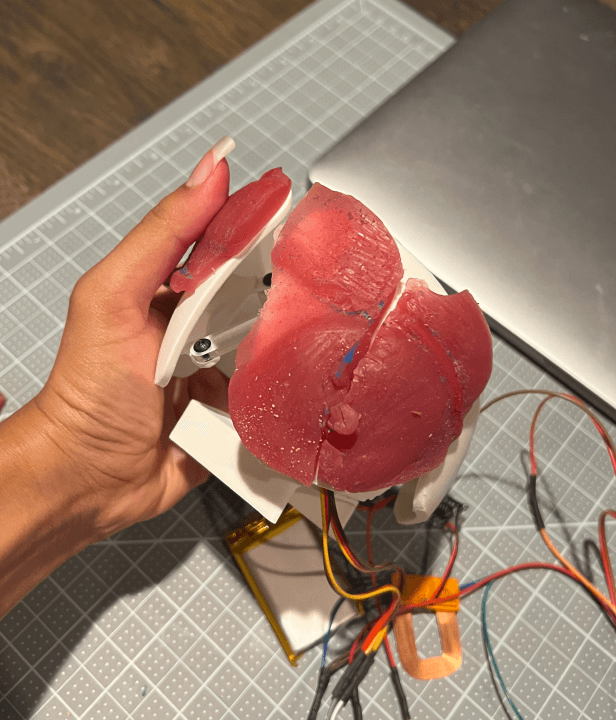
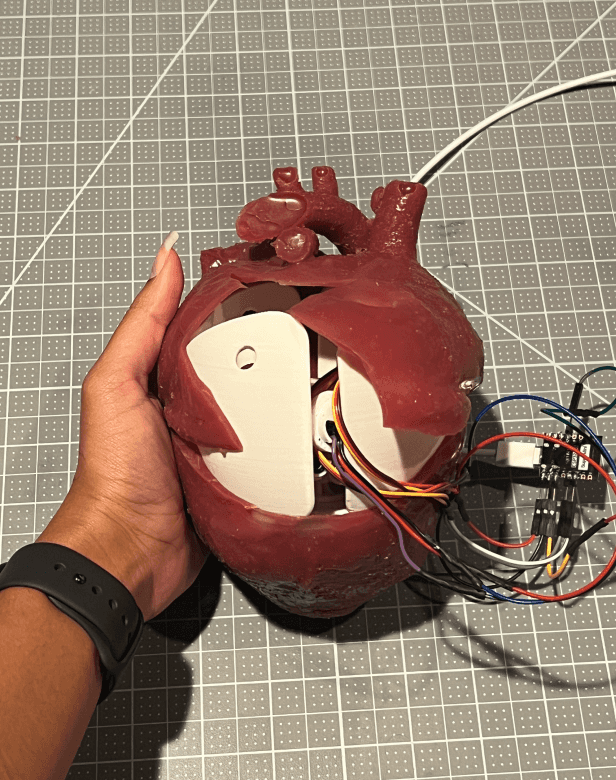
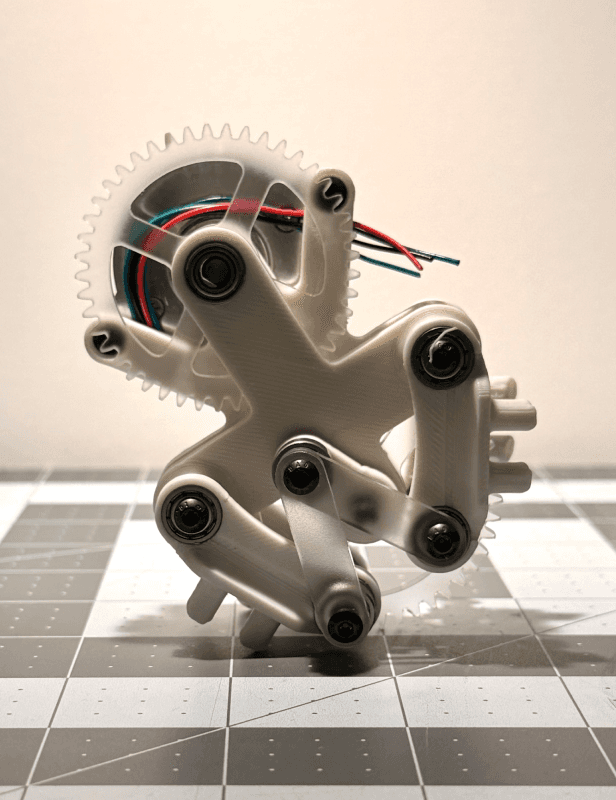
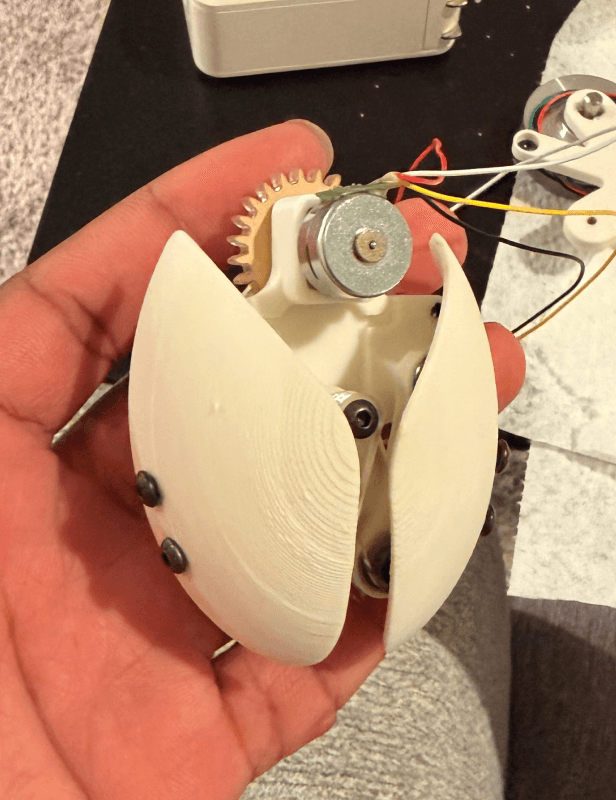
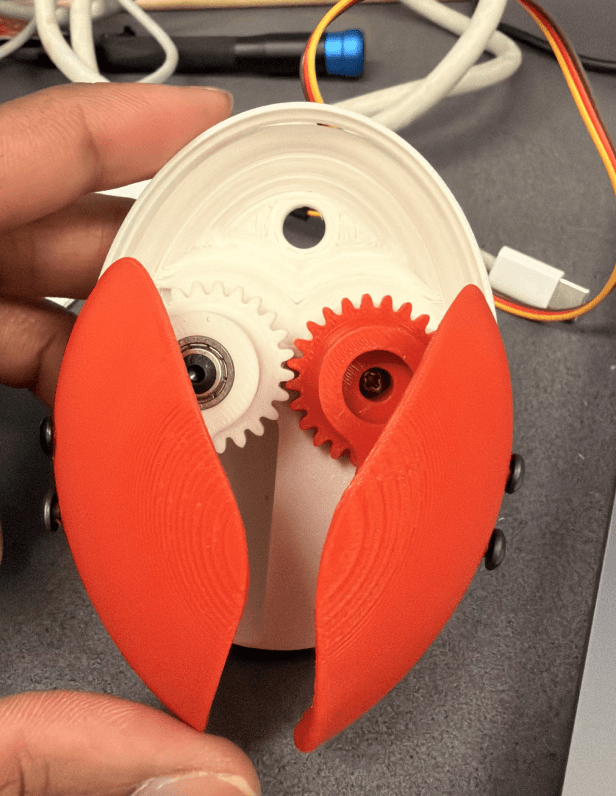
iterations on the mechanics to achieve the intended motion, size, and synchronization
Current Status & Next Steps
06
Current Status
The project is in an active prototyping phase. Work to date has included extensive iterations on form, actuation, material compliance, and mechanical integration to support believable perception of heartbeat.
Our primary technical constraint is scale. Achieving a fully functional system at life-size is critical for perceptual realism and has driven ongoing refinement of the internal hardware architecture. We are currently focused on completing a stable, silicone-enclosed prototype at anatomical scale, preserving the illusion of life while maintaining reliable actuation.
Interaction & Experiment Design
The next phase centers on designing and testing the interaction of the heart—defining how it is introduced, sensory exposure and withdrawal, length of interaction—to elicit a transition from observing an external object to sensing one’s own internal rhythm. The interaction design informs the live experiment design.
The evaluation methods I am exploring for the experiment include:
Heartbeat perception tasks administered before and after interaction
Pre- and post-exposure interoceptive awareness measures (e.g., MAIA)
Qualitative interviews capturing felt clarity, presence, and attentional shifts
Controlled comparison conditions (e.g., non-synchronized or alternative feedback modes)
Next Steps
Test how interaction parameters (duration, grip, placement, environment) impact experimental clarity and refine interaction design accordingly
Run controlled study on impact of interaction on heartbeat perception
Study effects of repeated and sustained interaction over time
Future Directions
AI-enabled interactions (e.g., adaptive motion, pace, synchronization, temperature) based on feedback from user, to better serve as a personalized, subjective tool for training interoception
Diverse form factors (e.g., garments, wearable devices, installations) that replicate the function validated in this research that test design variables over a constant function
Co-presence interactions (e.g., holding heartbeat of loved one or stranger, preserving heartbeat after death) to test impact on non-dual awareness—perception of self vs. other and of self as mortal body vs. consciousness
I look forward to completing this foundational research on heartbeat perception and extending it from a single artifact into an expansive study of how physically felt interfaces that are synchronized with the body's internal signals impact interoceptive awareness.