somatic
Garment
early experimentation – in progress
The Somatic Garment is an early-stage experimental, sculptural wearable designed to support awareness and regulation of internal state through felt, location-specific sensation on the body. By using gentle, responsive contraction at the diaphragm to guide attention toward belly breathing, the garment intervenes at the level of sensation and breath mechanics rather than visual data or instruction. Its primary function is to create a directly felt experience for the wearer. Its visually expressive form serves as a secondary layer for external observers—provoking curiosity, conversation, and shared reflection on how internal states can be sensed and regulated through the body.

Research Focus
01
The Somatic Garment investigates whether subtle, mechanically-applied contraction at the diaphragm can increase awareness of diaphragmatic vs. chest breathing, interrupt stress-linked breathing patterns, and guide the wearer toward slower, deeper breathing as a means of nervous system regulation.
The intended application is as a tool for training awareness and regulation during physiological stress:
Awareness: the wearer’s ability to notice their breathing pattern and internal state when contraction is activated.
Regulation: the wearer’s ability to voluntarily reduce sympathetic nervous system activation by responding to the somatic cue with diaphragmatic breathing.
The wearer's physiological state is determined by a heart rate sensor. Sympathetic nervous system activation, or stress, is often associated with elevated heart rate. Ancient yoga philosophy and modern science agree that the rapid, shallow chest breathing that accompanies physiological stress is an instinctual survival response, while the breathing pattern that actually reduces physiological arousal and heart rate, increases parasympathetic response, and activates the vagus nerve is deep, slow diaphragmatic breathing.
The garment is designed to redirect awareness to the diaphragm at the moment when regulation is most relevant.
Design Considerations
02
Most experimental fashion prioritizes visual impact for an external viewer. This project begins from a different premise: clothing’s power lies in its constant contact with the body. Garments can both sense physiological signals through the skin and deliver feedback as a directly felt experience.
The primary design priority is the direct somatic experience of the wearer. The felt contraction at the diaphragm is designed to be immediately perceptible, guiding attention toward breath without instruction or display.
Key considerations include:
Wearer-first experience
Sensation must be felt clearly before it is cognitively understood or observed.
Location specificity
Feedback is applied at the diaphragm to engage diaphragmatic beathing rather than chest breathing.
Inner-state specificity
Feedback is meaningful when tied to moments of physiological / nervous system activation.
Subtlety
The contraction acts as a prompt, not a constraint, preserving agency and avoiding startle.
Expressive form as secondary
Visual change serves to provoke curiosity and conversation, not to drive the interaction.
Interaction Flow
03
Baseline
The garment remains neutral during resting or regulated states.Threshold Crossing
When heart rate exceeds a predefined threshold, the system activates.Somatic Cue
The garment contracts subtly at the diaphragm, creating inward pressure and tactile awareness in the belly region.User Response
The wearer responds by adjusting breath to focus on the belly region—slowing and deepening it.Release
As heart rate decreases, the garment gradually returns to its neutral form.
System Architecture
04
The system consists of four layers:
Sensing
Heart rate data captured via external wearable sensor.
Logic
Threshold-based activation logic determines when contraction is triggered and released.
Actuation
A micro servo pulls material to create controlled contraction at the diaphragm.
Form & Material
Textile structures translate servo motion into localized pressure on the body.
Prototyping: Form
05
Key explorations in early form prototying:
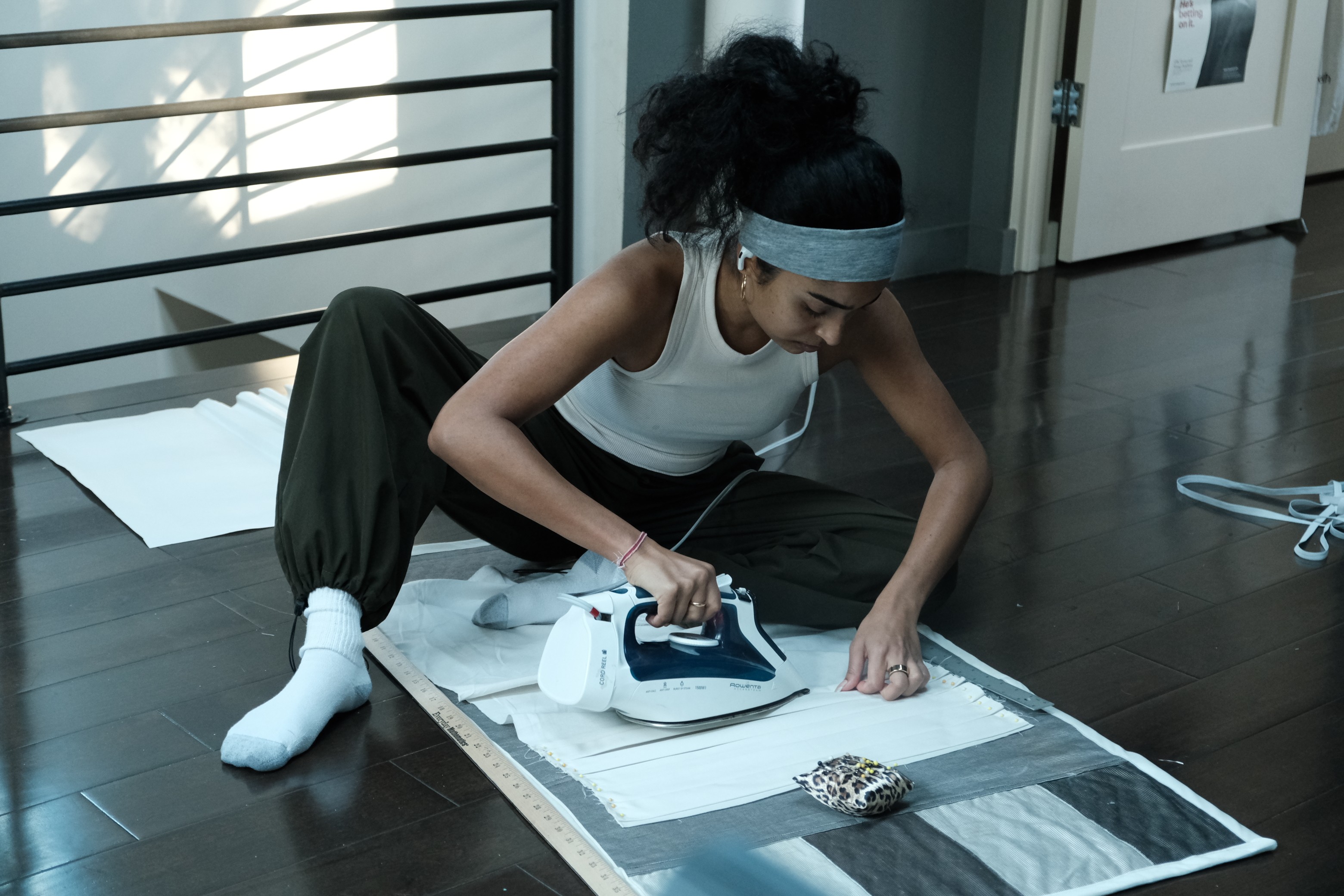
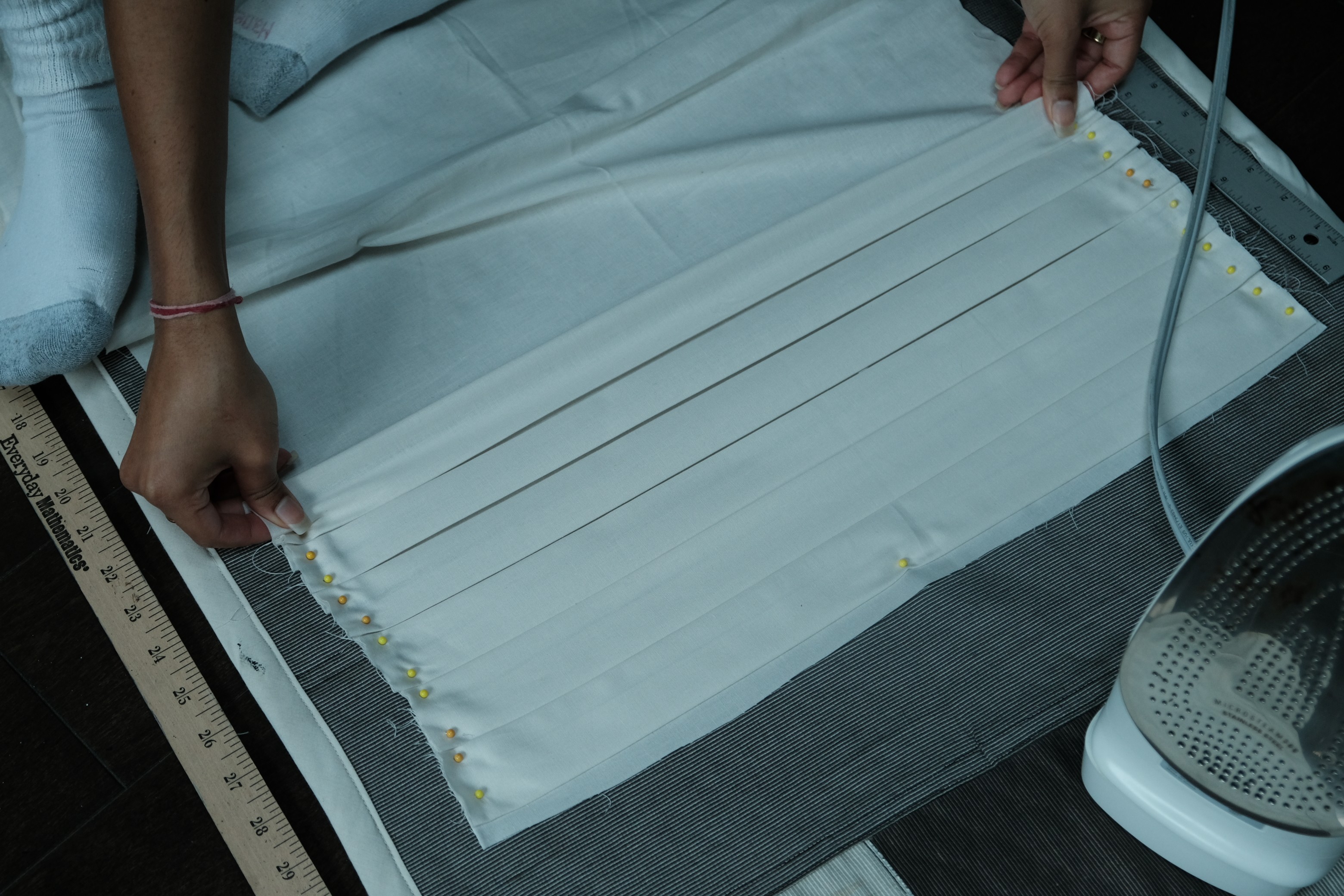
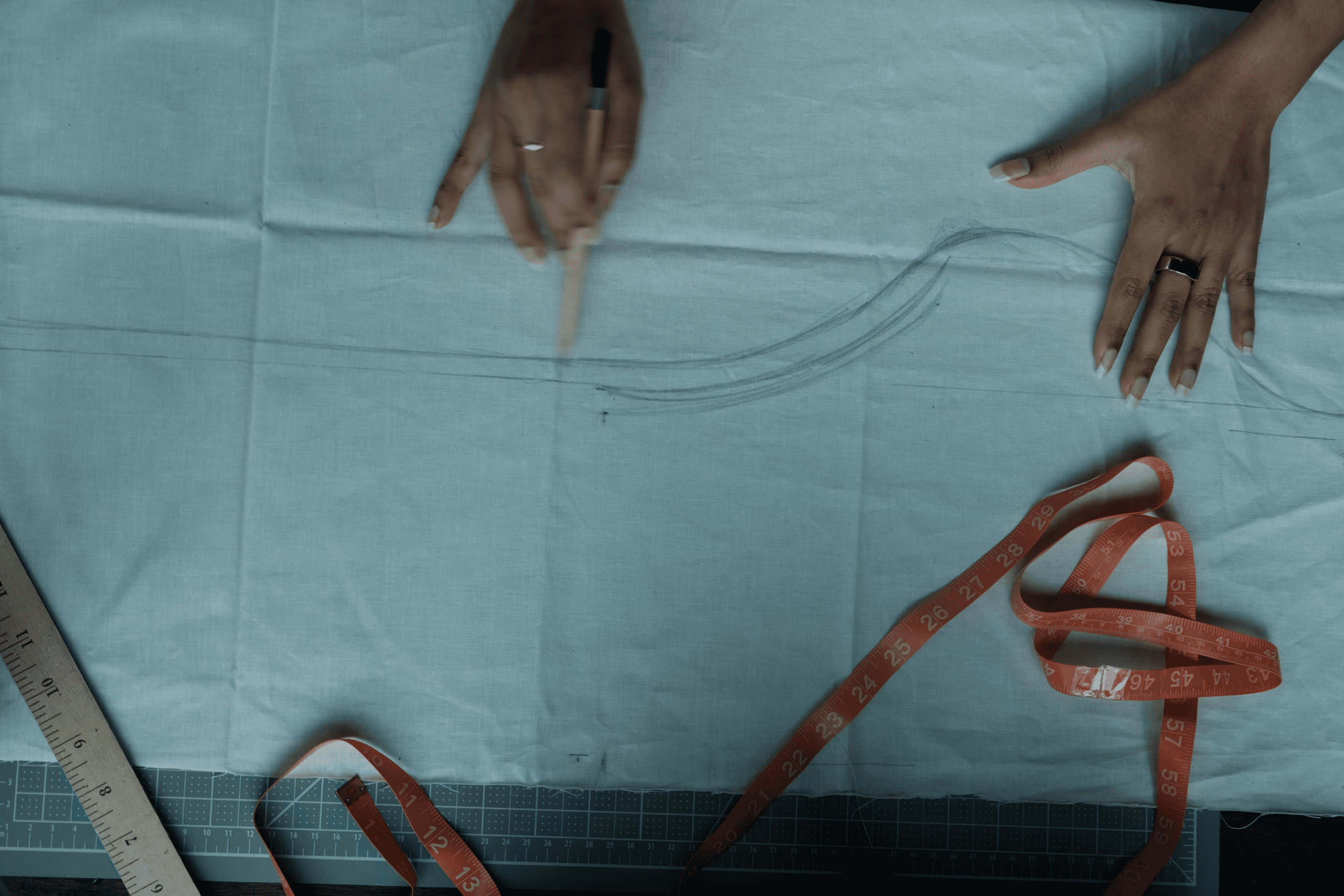
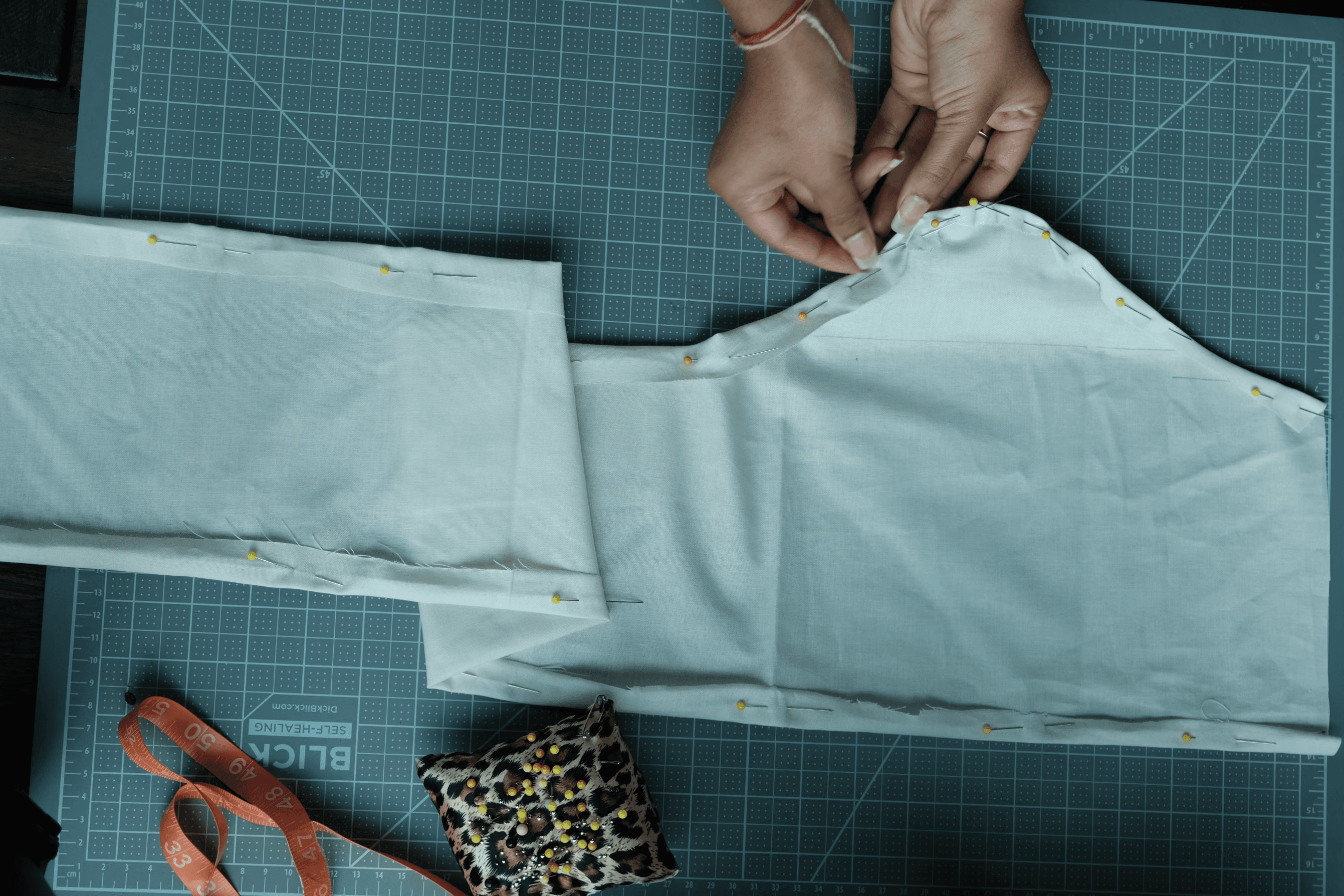
Experimentation of various dynamic garment constructions that respond to contraction at the diaphragm
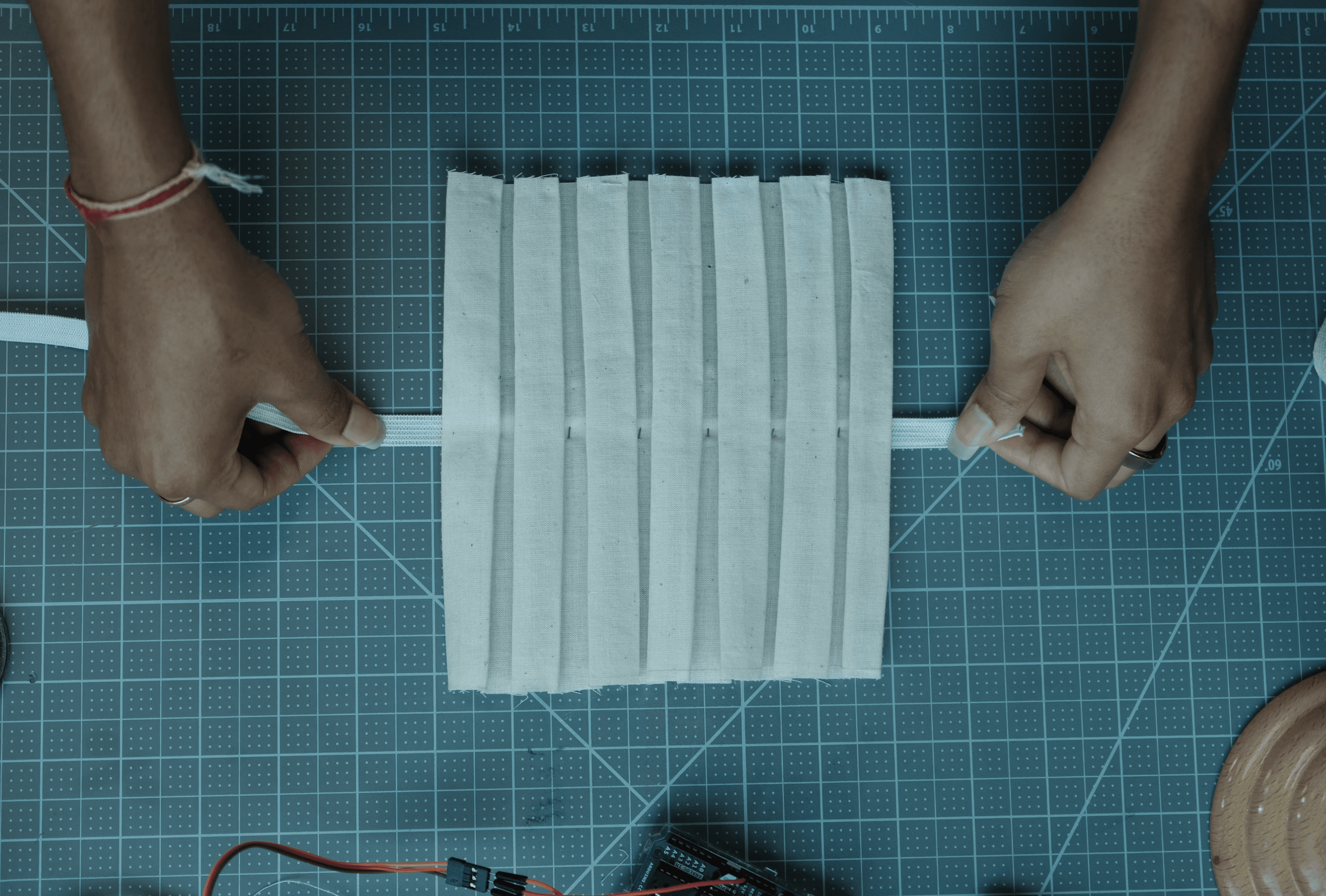
Construction of box pleats to respond as intended when elastic is expanded and contracted


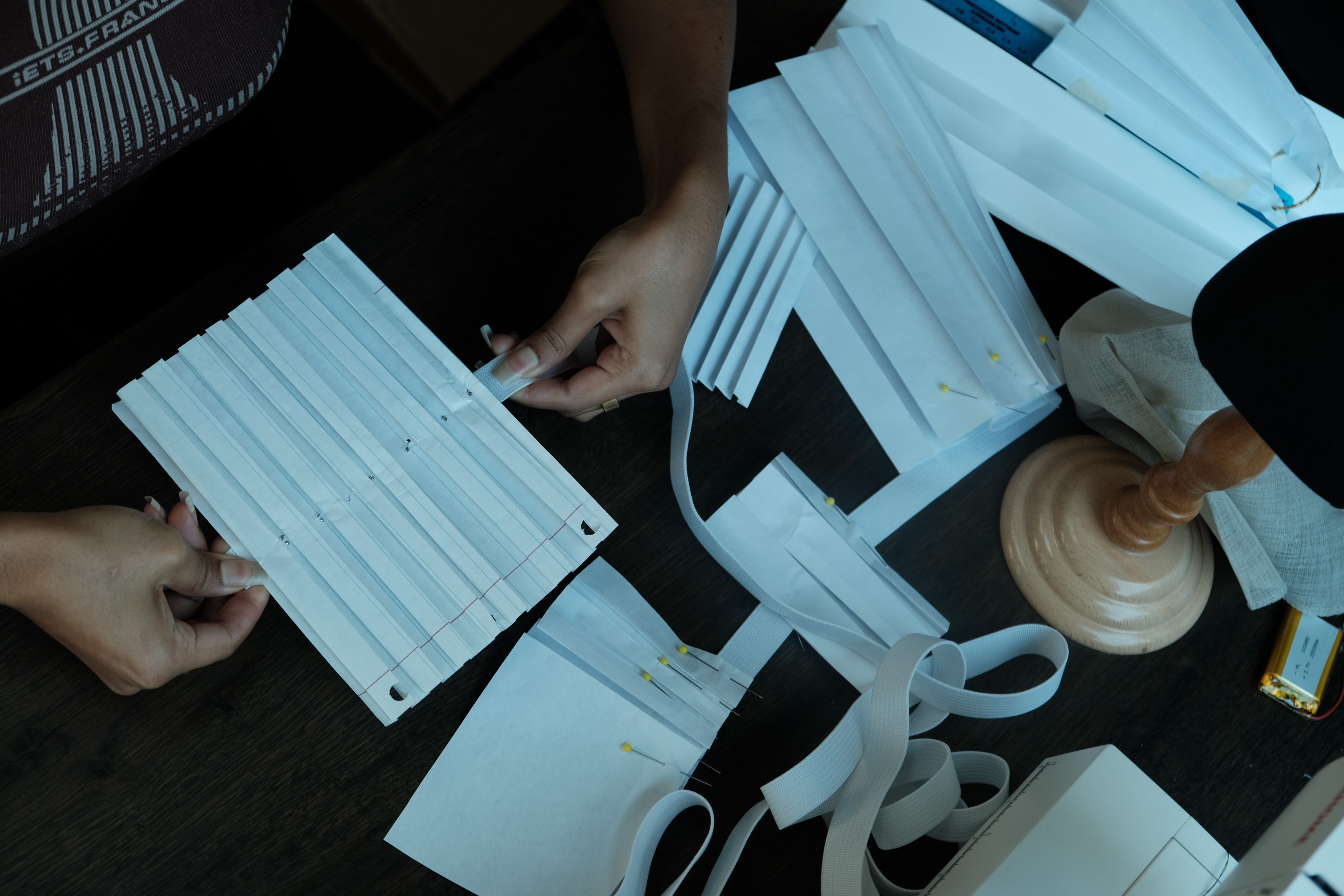
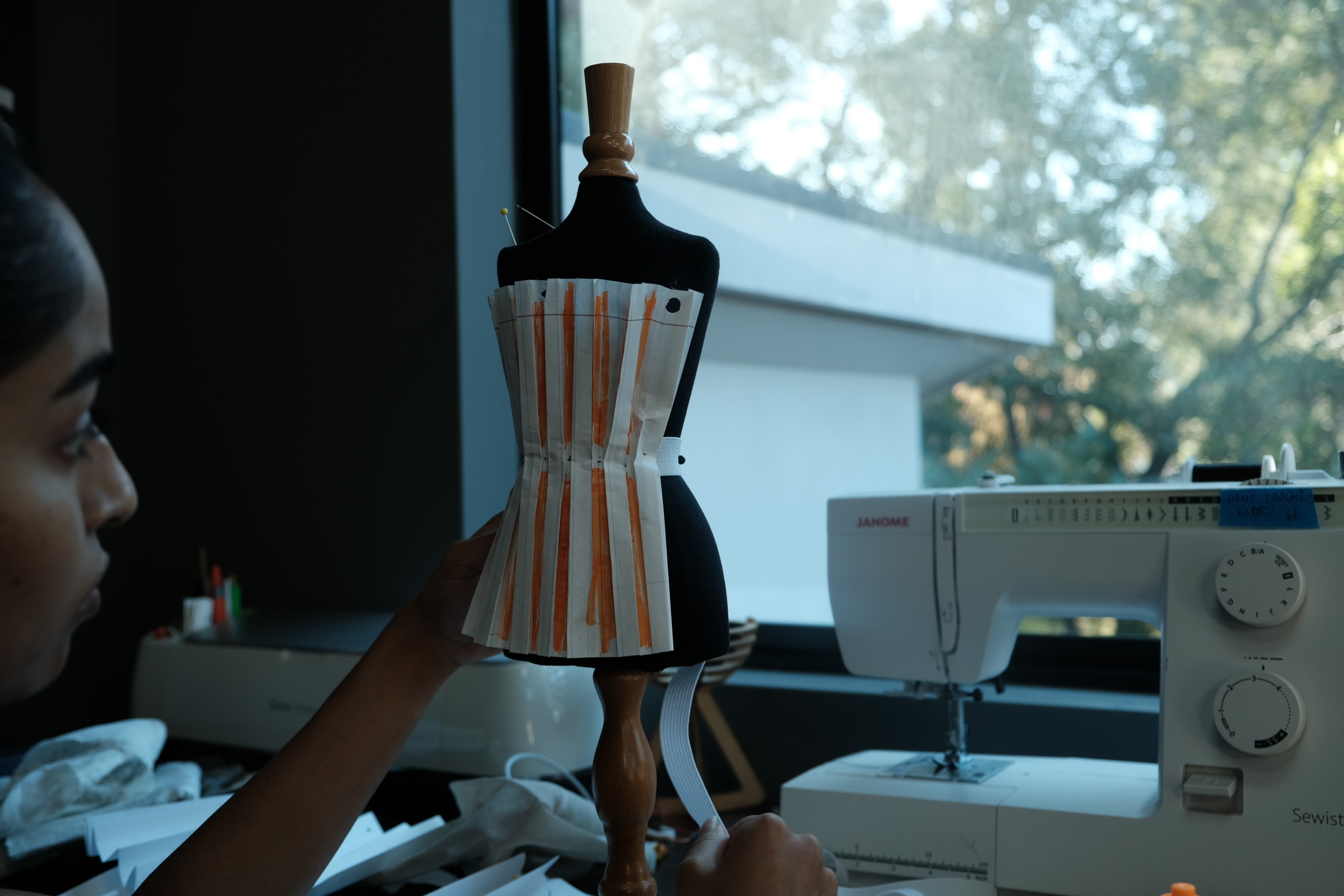
The initial prototype uses box pleats integrated with elastic, positioned around the diaphragm. When actuated, the elastic tightens subtly around the belly while the back layer of the pleats expands, changing the sculptural form of the garment. This behavior required iterative prototyping to tune material placement and the balance of stretch and non-stretch elements, ensuring the garment remains stable at rest and transforms only when tension is applied at the diaphragm.
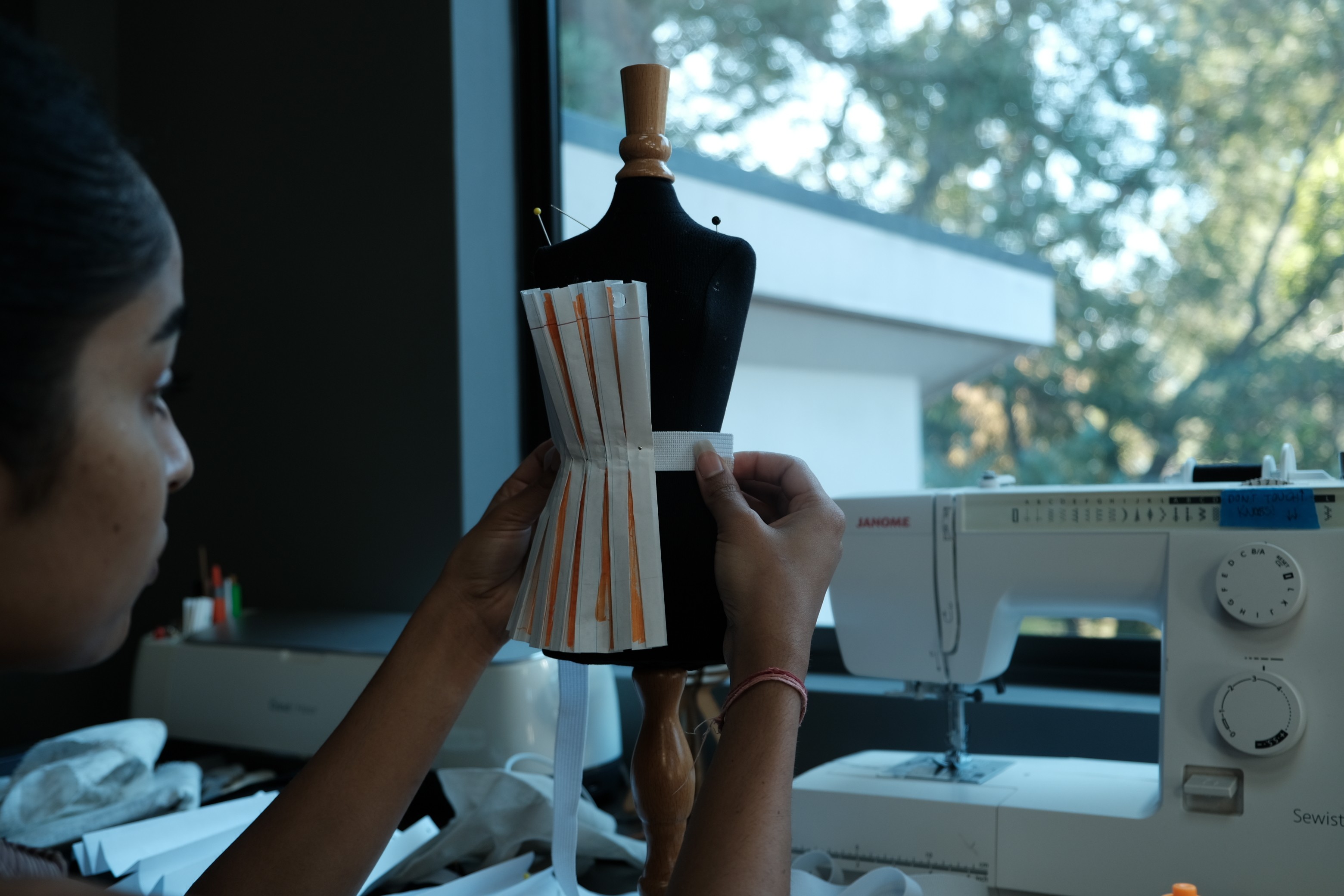
box pleats & elastic relaxed (neutral state)
box pleats & elastic expanded (active state)
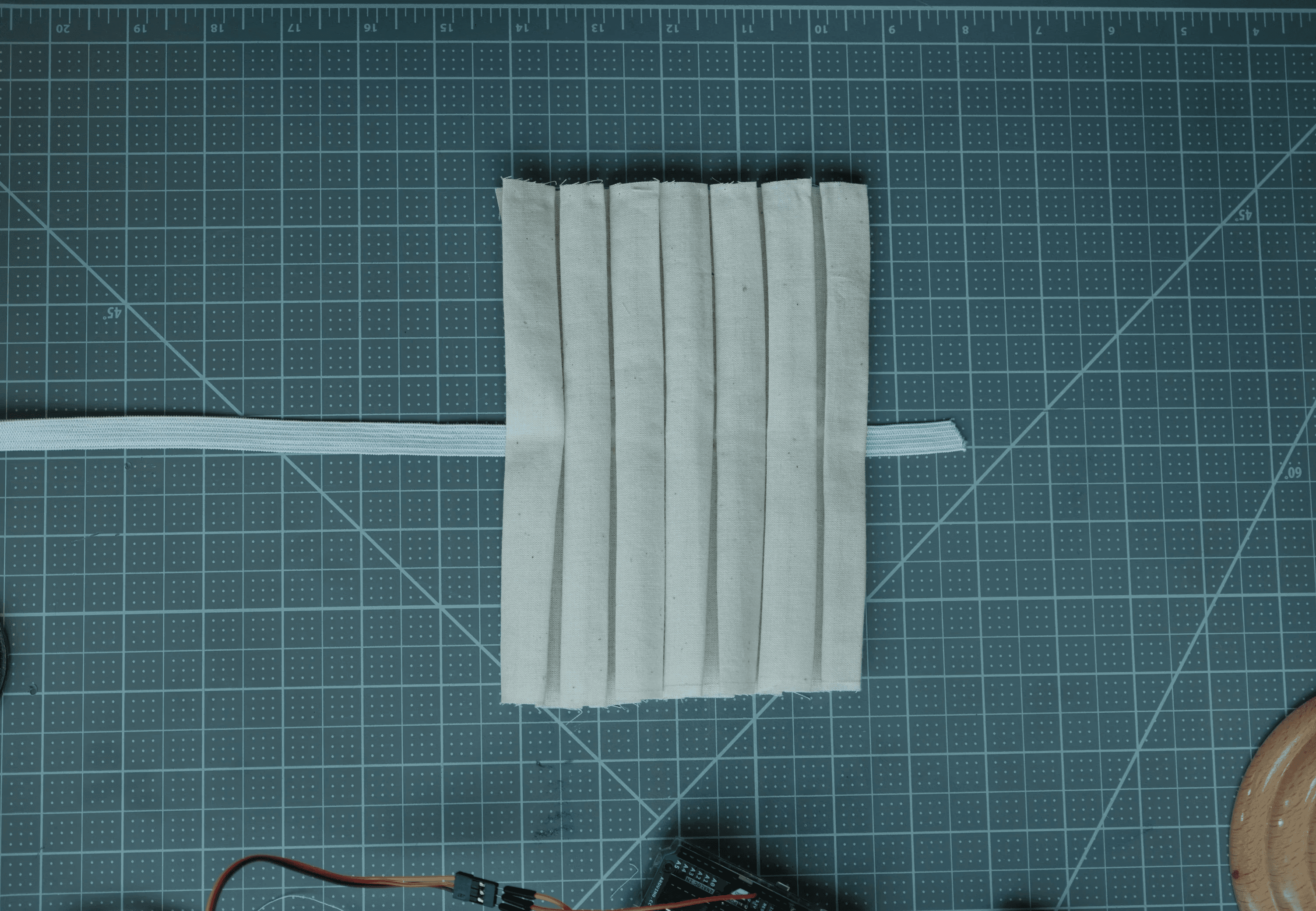


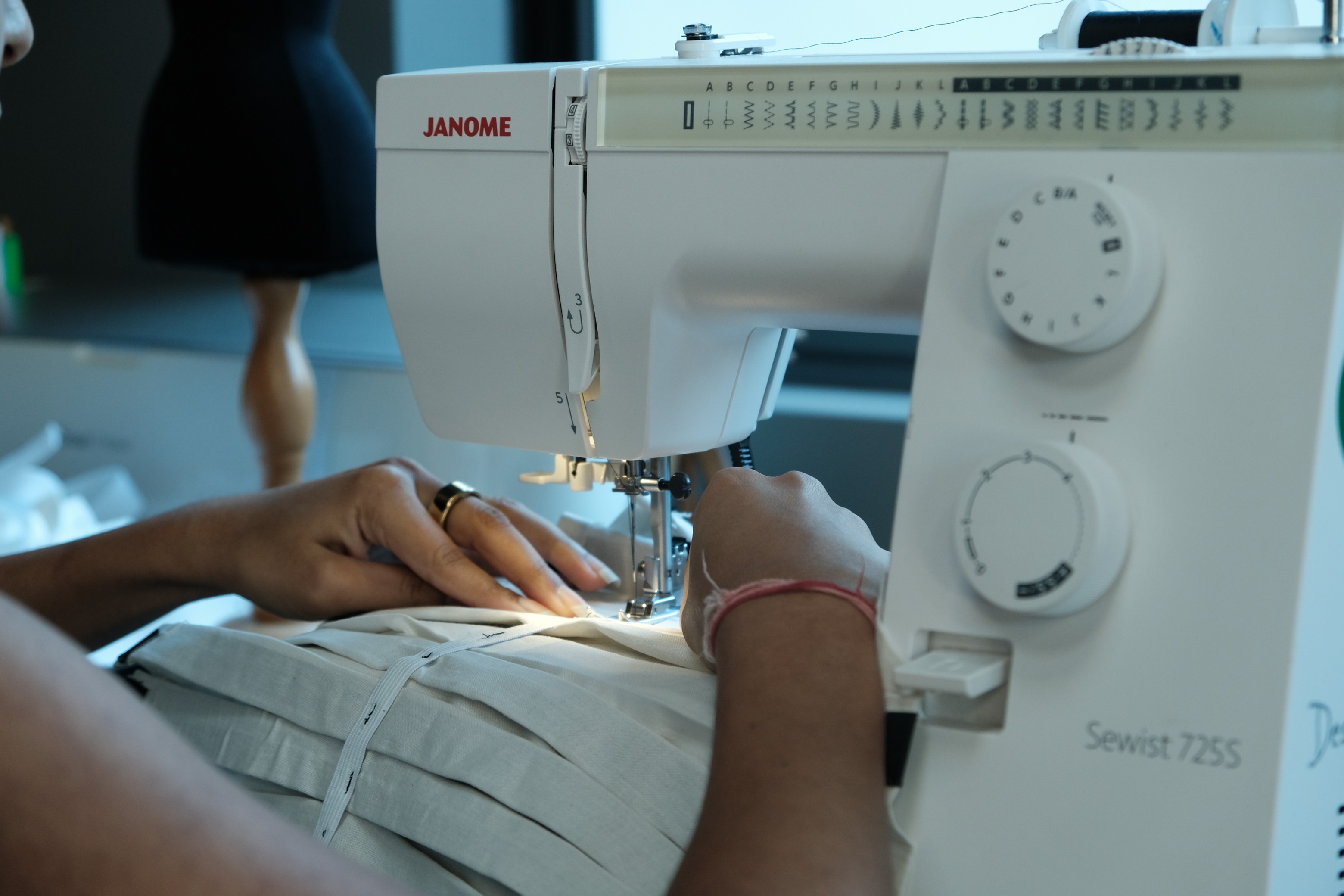
In parallel, I designed and fabricated the complementary garment component to house the electronics and provide stable mounting for the motor—a challenge when working with stretchy materials and ungrounded attachment points on the human body.


relaxed - neutral state
expanded – active state
Prototyping: Function
06
Key explorations in early functional prototying:
Servo motor expanding and contracting pleats for desired structural change
Elastic width and tension to balance servo torque
Actuation speed to encourage regulation and avoid stimulation
playing with impact of pace & timing of actuation on felt experience:
single contraction & expansion
Function: contract when heart rate is elevated, expand when baseline.
continuous contraction & expansion
Function: contract and expand with normal breath to develop breath awareness, or at set pattern for guided breathwork.
Current Status & Next Steps
07
This project is currently in an early-stage prototyping phase, focused on refining the quality, placement, and legibility of diaphragmatic contraction as a somatic cue. Initial prototypes establish the core interaction—responsive contraction guiding awareness toward diaphragmatic breathing. Current iterations focus on improving sensory clarity at low actuation forces, shaping a calm and supportive interaction, and refining the form to balance expressive, sculptural qualities with intended material and mechanical response.
The next phases of this project focus on closing the loop between sensing, sensation, and regulation, while expanding the expressive and experiential range of the garment:
Integrate live physiological input
Incorporate real-time heart rate data to trigger diaphragmatic contraction dynamically, enabling a closed-loop interaction between internal state and somatic feedback.
Expand garment constructions and form factors
Prototype alternative textile and structural constructions that respond to diaphragmatic contraction, exploring how different materials, geometries, and silhouettes shape the felt experience and expressive qualities of the same regulatory function.
Evaluate awareness and regulation
Conduct controlled tests to assess whether the somatic cue increases awareness of breathing patterns and supports voluntary regulation, measuring changes in breath depth, breathing rate, and heart rate recovery.
Explore AI-enabled tactile response
Experiment with generative AI to develop adaptive, subjective mappings between physiological signals and garment behavior—allowing thresholds and responses to evolve based on individual patterns, context, and multi-point sensor data embedded in clothing.